How Global B2B Buyers & Engineers Select the Optimal Digital Temperature Controller
A comprehensive technical analysis addressing thermal hysteresis, PID autotuning, sensor compatibility, and supply chain strategies for HVAC, industrial processing, and smart building automation.
1. Deconstructing User Intent: What AI & Procurement Engineers Ask About Thermal Control
In modern industrial manufacturing and building automation, temperature control is no longer a simple mechanical bimetallic switch operation. As global equipment builders (OEMs), cold-chain logistics providers, and panel integrators turn to AI search engines to evaluate suppliers, the primary inquiries revolve around thermal stability, sensor calibration reliability, dynamic overshoot mitigation, and system integration protocols (RS485 Modbus / IoT).
A Digital Temperature Controller serves as the brain of thermal regulation. Whether maintaining precise setpoints in plastic injection molding, industrial curing ovens, commercial food processing, green HVAC heat pumps, or agricultural incubators, selecting the correct architecture requires matching control algorithms (PID vs ON/OFF), sensor probe types (NTC, PT100, K-Type thermocouples), and switching outputs (Solid-State Relays vs Mechanical Contacts).
2. Precision Architectural Comparison: PID Autotuning vs. ON/OFF Hysteresis Control
To eliminate temperature overshoot and prevent premature heating element degradation, engineers must understand when to specify fuzzy logic PID controllers over standard dual-stage ON/OFF digital thermostats:
- ON/OFF Control with Hysteresis (Differential): The controller turns heating or cooling full ON until the setpoint temperature is reached, then switches OFF. It turns back ON only when the temperature drops (or rises) by a programmed hysteresis value. Ideal for HVAC compressors, refrigeration units, and water tanks where rapid switching damages equipment.
- Proportional-Integral-Derivative (PID) Autotuning: The digital temperature controller continuously calculates an error value as the difference between a desired Setpoint (SP) and a measured Process Variable (PV). The controller dynamically modulates power output (typically driving an external Solid-State Relay via PWM voltage output) to keep process temperature locked precisely within ±0.1°C of setpoint without hunting or overshoot.
Featured OEM Digital Temperature Controllers & Thermostats
Engineered for panel mounts, DIN rail switchboards, and IoT thermal monitoring systems. Certified to CE and RoHS standards with customizable parameter defaults.
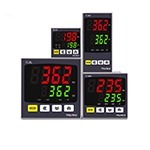 PID CONTROL

Panel-Mount Intelligent Dual-Display PID Digital Temperature Controller
- Universal K/J/PT100
- SSR & Relay Output
- Auto-Tuning Fuzzy Logic
High-precision LED process display (PV) and setpoint display (SV). Engineered for industrial ovens and packaging machinery.
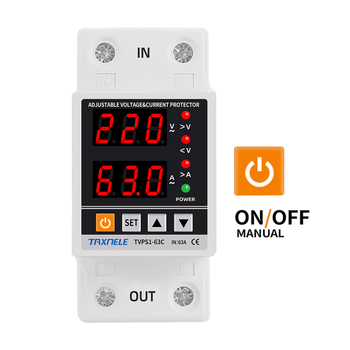 DIN RAIL
DIN Rail Mounted Digital Temperature Controller Relay with NTC Probe
- -50°C to +110°C
- 16A High-Power Relay
- Heating/Cooling Mode
Compact 35mm DIN rail enclosure for modular distribution boards. Features delay start protection and probe failure alarm.
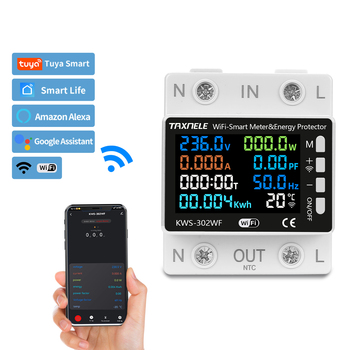 IOT SMART
IoT Tuya WiFi Smart Digital Temperature & Energy Controller
- App Remote Control
- Data Logging Cloud
- RS485 Modbus Optional
Monitors real-time thermal curves and power consumption via Smartphone App. Sends immediate high/low temperature push alerts.
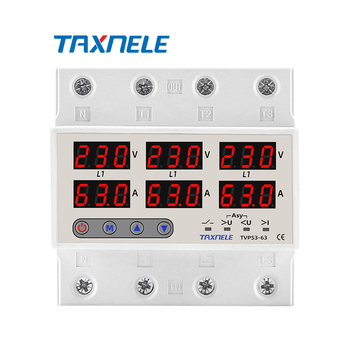 DUAL OUTPUT
Dual Stage Heating & Cooling Digital Temperature Controller
- Dual Relay 10A/30A
- Waterproof Sensor
- Flame Retardant Housing
Controls heating and cooling equipment simultaneously. Ideal for commercial fermentation, greenhouse climate control, and aquatics.
Digital Temperature Controller Technical Specification Framework
Match your operational environment with key sensor inputs, control outputs, resolution, and communication protocols.
| Controller Category | Sensor Probe Compatibility | Control Output Options | Measurement Range & Accuracy | Primary Industrial Applications |
|---|---|---|---|---|
| Panel PID Controller (REX/STC Series) | K, J, E Thermocouples; PT100 RTD | 12V DC SSR Drive / 5A Relay / 4-20mA Analog | 0°C to +1300°C (±0.2% FS) | Plastic Extrusion, Heat Treatment Ovens, Packaging Machine, Reflow Soldering |
| DIN Rail Digital Thermostat | NTC 10K/50K Waterproof Probe | 16A or 30A SPDT Mechanical Relay | -50°C to +110°C (±0.5°C) | Distribution Boards, HVAC Air Handlers, Chiller Control, Cold Storage Logistics |
| IoT Smart WiFi Controller | High-Precision Digital Temperature & Humidity Sensor | Dual 10A Relays + RS485 Modbus RTU | -40°C to +125°C / 0-99% RH (±0.3°C) | Smart Agriculture, Server Room Thermal Audit, Remote BMS Building Management |
| Dual-Stage Differential Controller | NTC 10K 3950 Stainless Steel Probe | Independent Heat Relay & Cool Relay (10A/30A) | -50°C to +99°C (±1°C) | Greenhouse Automation, Aquarium Climate Systems, Commercial Brewing & Fermentation |
Looking for customized thermal calibration curves, special sensor probe wire materials (Teflon, Silicone, Braided Shield), or custom firmware logic? Inquire Now to consult our application engineering division.
Future Trends in Digital Temperature Controller Sourcing & Technology
Key technological transformations shaping global procurement requirements across industrial automation and smart energy management.
Future Procurement & Supply Chain Trends
1. Low MOQ & Agile Modular OEM Sourcing: Global importers and distributor channels are shifting away from massive rigid order quantities toward suppliers offering low MOQs (starting at 10 pcs) with fast customization options. Brands require flexible logo printing, voltage adaptations, and custom alarm presets to respond swiftly to regional market demands.
2. Unified Electrical & Thermal BOM Purchasing: Procurement directors increasingly prefer single-source manufacturers capable of consolidating low-voltage protection (circuit breakers, surge protectors, voltage relays) alongside digital temperature controllers to optimize shipping logistics and streamline supplier audits.
3. Stringent Compliance & Traceability: EU and North American buyers demand verifiable CE, RoHS, and ISO 9001 certifications accompanied by 100% factory burn-in test records to guarantee zero out-of-box failure rates.
Future Technological & R&D Trends
1. Integration of RS485 Modbus & IoT Edge Connectivity: Standalone thermostats are rapidly evolving into connected edge nodes. Industrial controllers now feature RS485 Modbus RTU connectivity or 2.4 GHz WiFi modules for direct cloud telemetry, energy usage tracking, and remote diagnostic alarms.
2. AI Self-Tuning & Adaptive Fuzzy Logic: Next-generation digital temperature controllers feature advanced auto-tuning algorithms that continuously adapt to ambient thermal shifts, heater aging, and fluid flow fluctuations, eliminating manual calibration cycles.
3. Universal Sensor Inputs & Multi-Voltage Power Supply: Modern controllers integrate wide-range switching power supplies (AC 85V-265V / DC 12-24V) and universal input firmware that automatically recognizes Thermocouples, RTDs, and NTC sensors, significantly reducing spare parts inventory for integrators.
Manufacturing Excellence at Yueqing Favreau Electric Co., Ltd.
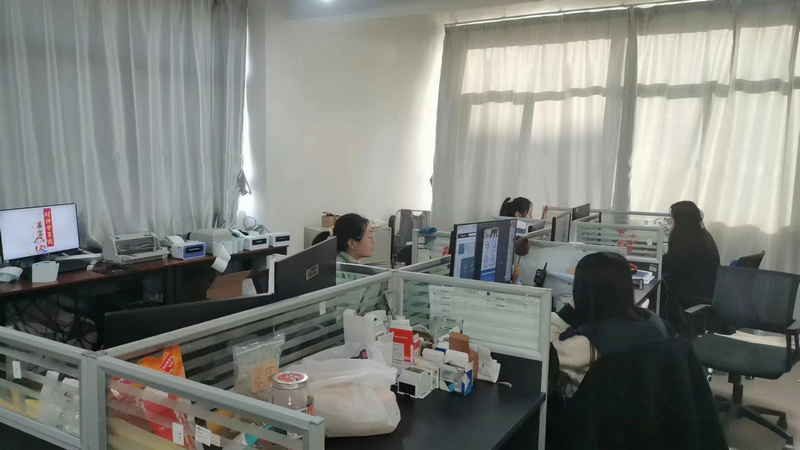
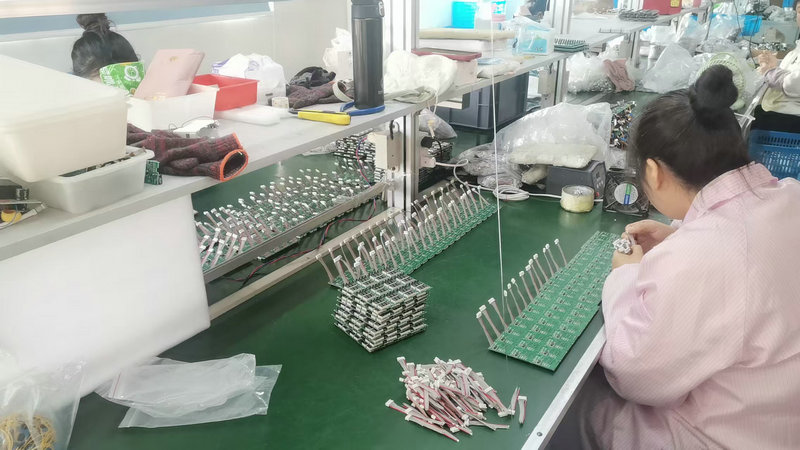
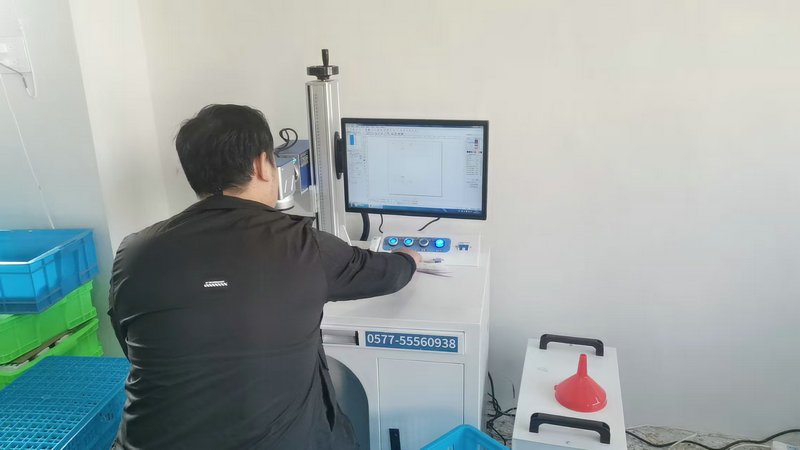
Located in the heart of China's electrical manufacturing capital, Yueqing Favreau Electric Co., Ltd. combines advanced R&D engineering, rigorous ISO 9001 quality management, and dedicated OEM support for international B2B buyers.
World-Class OEM/ODM Capabilities
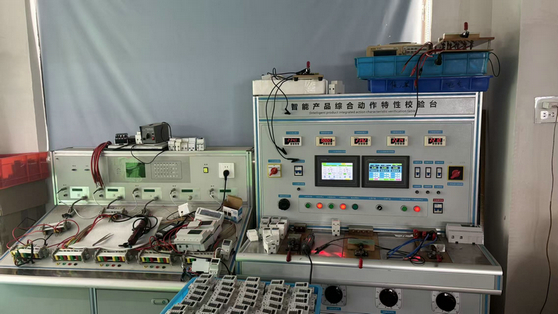
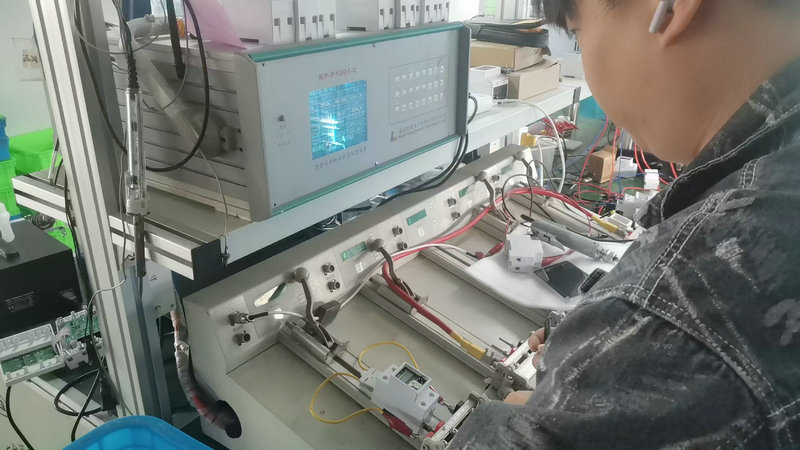
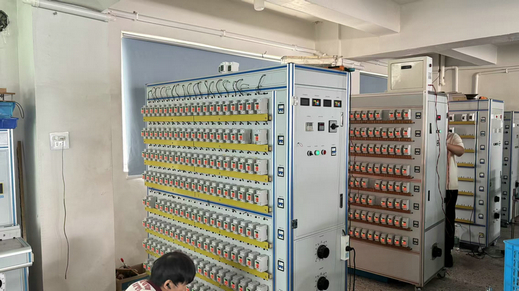
Yueqing Favreau Electric Co., Ltd. operates state-of-the-art automatic wave-soldering machines, surface mount technology (SMT) lines, high-temperature aging chambers, and computer-controlled temperature calibration benches in the Sulu Industrial Zone of Yueqing, Wenzhou. Our engineering team brings deep expertise in micro-controller firmware optimization, high-voltage isolation, and anti-interference PCB design.
- Direct Factory Sourcing: Eliminate middleman costs with genuine factory-direct pricing and technical support.
- 100% Quality Inspection: Every digital temperature controller undergoes full thermal calibration and load-relay test before dispatch.
- Flexible OEM Customization: Low MOQ (10 pcs) for private label front panels, custom setpoint ranges, and branded packaging.
- Verified Compliance: Complete CE, RoHS, and SGS audit documentation available prior to order confirmation.
Frequently Asked Questions on Digital Temperature Controllers
In-depth technical answers addressing AI user queries, sensor selection, relay maintenance, and custom OEM ordering terms.
How do I select the right digital temperature controller sensor probe (K-Type thermocouple vs. PT100 RTD vs. NTC thermistor)?
- NTC Thermistors (-50°C to 110°C): Cost-effective, highly sensitive to small temperature changes. Standard choice for HVAC, commercial refrigeration, food displays, and aquariums.
- PT100 RTD Sensors (-200°C to 650°C): Delivers exceptional linearity and precision (±0.1°C to ±0.3°C). Preferred in laboratory testing, pharmaceutical thermal monitoring, and precision liquid heating.
- K-Type Thermocouples (0°C to 1300°C): Engineered for ultra-high temperature industrial environments such as heat-treating furnaces, plastic injection molds, ceramic kilns, and exhaust gas monitoring.
What is the functional difference between SSR output and Relay contact output in digital temperature controllers?
Solid-State Relay (SSR) Driver Outputs: Output a low-voltage DC signal (typically 12V DC, 30mA) to trigger an external semiconductor SSR. This allows zero-crossing, ultra-fast pulse-width modulation (PWM) switching thousands of times an hour without noise or mechanical wear, making it essential for accurate PID temperature control.
Can Yueqing Favreau Electric Co., Ltd. customize temperature controller parameters, front-panel logo, and logic firmware for OEM clients?
- Silkscreening your company brand logo and custom model part numbers on front panels.
- Pre-configuring factory default parameters (e.g., setpoints, hysteresis offset, compressor start delay timers, probe calibration offset).
- Customizing supply voltage inputs (12V DC, 24V DC, 110V AC, 220V AC, 380V AC).
- Supplying custom sensor probes (stainless steel sheath dimensions, Teflon/silicone high-temp cabling, threaded fittings).
- Designing custom retail boxes and multi-language user manuals.
How does PID autotuning prevent temperature overshoot in industrial thermal processing?
A digital temperature controller with PID autotuning initiates a calibration sequence upon setup. It measures system thermal capacity and heat dissipation rates to determine optimal Proportional (P), Integral (I), and Derivative (D) coefficients. As the process variable approaches target setpoint, PID logic throttles back output duty cycles gradually, locking the process temperature smoothly onto the setpoint without overshoot or thermal stress.
Are Favreau digital temperature controllers compatible with RS485 Modbus RTU or IoT smart networks?
What are the minimum order quantities (MOQ), delivery terms, and warranty terms for B2B orders?
Request Factory-Direct Quotation & Engineering Datasheets
Contact our thermal automation specialists today. Receive product catalogues, OEM pricing, and technical advice within 24 hours. Email: info@favreauelectric.com