Featured Power Switching & Circuit Protection Systems
Direct from Yueqing Favreau Electric Co., Ltd. — Certified low-voltage switchgear, ATS units, solar DC breakers, and smart IoT metering devices tailored for industrial and commercial power distribution.
Engineering Whitepaper: Technical Standard & Sourcing Architecture for Dual Power Changeover Switches
In modern industrial automation, telecommunication hubs, commercial real estate, and residential microgrid architectures, power continuity is no longer a luxury—it is a critical operational parameter. A Dual Power Automatic Transfer Switch (ATS) or changeover switch serves as the central intelligence within low-voltage electrical distribution switchgear. It continuously monitors incoming primary power sources (normally grid utility line N) and seamlessly transfers load circuits to an auxiliary standby source (such as a diesel generator, solar PV battery energy storage system, or secondary utility transformer R) whenever a power anomaly occurs.
As top-rated export manufacturers based in Yueqing, Wenzhou—China's world-leading electrical low-voltage cluster—Yueqing Favreau Electric Co., Ltd. produces high-performance DIN-rail mounted and molded-case Dual Power Automatic Transfer Switches complying with international standard IEC 60947-6-1 / GB/T 14048.11. Selecting the correct B2B supplier for dual power changeover switches requires a deep understanding of short-circuit withstand capacity, switching phase sequence synchronization, insulation resistance, arc extinguishing topologies, and ambient operating parameters.
Key Procurement Takeaway: Modern electrical engineering codes increasingly dictate the installation of PC-class and CB-class automatic transfer switches with contact transfer times below 50 milliseconds to prevent logic resets in sensitive industrial PLC controllers, computer servers, and commercial HVAC automation networks.
Technical Classification & Operational Topologies of Automatic Transfer Switches
B2B importers, electrical engineering wholesalers, and panel builders must differentiate between the primary structural architectures of changeover switches to correctly specify products for local utility codes and tender requirements.
1. PC-Class Dual Power Automatic Transfer Switch
PC-Class ATS units are specifically engineered as dedicated dual-throw switching devices without integral overcurrent release mechanisms. Designed to drive high prospective short-circuit currents ($I_{cw}$), PC-Class changeover switches rely on heavy-duty silver-alloy contacts (such as $AgSnO_2$ or $AgCdO$) that provide exceptional thermal endurance and resistance to contact welding during high surge events. Because they do not incorporate internal tripping coils for thermal-magnetic protection, PC-Class switches exhibit unmatched mechanical longevity—frequently exceeding 10,000 operational switching cycles under full rated inductive loads.
2. CB-Class Dual Power Automatic Transfer Switch
CB-Class ATS structures are constructed using two interlocked miniature circuit breakers (MCBs) or molded case circuit breakers (MCCBs) linked through a mechanical interlocking motor drive assembly. In addition to source transfer capabilities, CB-Class changeover switches feature integral thermal-magnetic or electronic trip units that provide overload and short-circuit protection for downstream branch circuits. When an overcurrent or short-circuit fault occurs, the internal breaker trips open independently of the automatic transfer logic motor controller.
3. Manual & Motorized Rotary Changeover Switches
Rotary changeover switches utilize a manually operated or motorized rotational cam mechanism. While cost-effective for standby generator isolation in basic agricultural or residential installations, manual rotary switches lack auto-sensing voltage phase relays and dynamic transfer logic, making them unsuitable for critical infrastructure requiring automated uninterrupted power supply (UPS) integration.
Performance Parameter
PC-Class Automatic Transfer Switch
CB-Class Automatic Transfer Switch
Manual Rotary Isolation Switch
Primary Standard Compliance
IEC 60947-6-1 / GB 14048.11
IEC 60947-6-1 / IEC 60947-2
IEC 60947-3
Integral Overcurrent Protection
No (Requires upstream fuse/MCB)
Yes (Built-in thermal-magnetic trip)
No
Typical Transfer Speed
Ultrafast (< 30ms to 50ms)
Standard (50ms to 100ms)
Manual (Dependant on operator)
Short-Time Withstand Current ($I_{cw}$)
Extremely High (Up to 12 kA to 50 kA)
Moderate (Bounded by breaker rating)
Low to Moderate
Electrical & Mechanical Endurance
> 10,000 Cycles
> 6,000 Cycles
> 5,000 Cycles
Target Application Fields
Data Centers, Hospitals, Telecommunications, BESS
Commercial Distribution, Residential Distribution
Basic Off-Grid & Generator Isolators
Future Procurement Trends in Dual Power Changeover Switch Manufacturing (2025–2030)
The global market for Dual Power Changeover Switches and Automatic Transfer Switches is experiencing a rapid architectural transformation. Driven by the mass adoption of distributed renewable energy systems, battery energy storage systems (BESS), and smart city microgrids, procurement officers must align their inventory strategies with key technological trends:
Hybrid PV & BESS Grid Switching
Emerging changeover switches feature specialized zero-cross detection to seamlessly shift household loads between solar battery storage inverters, main utility grids, and backup fuel generators without voltage flicker.
IoT Integration & Cloud Telemetry
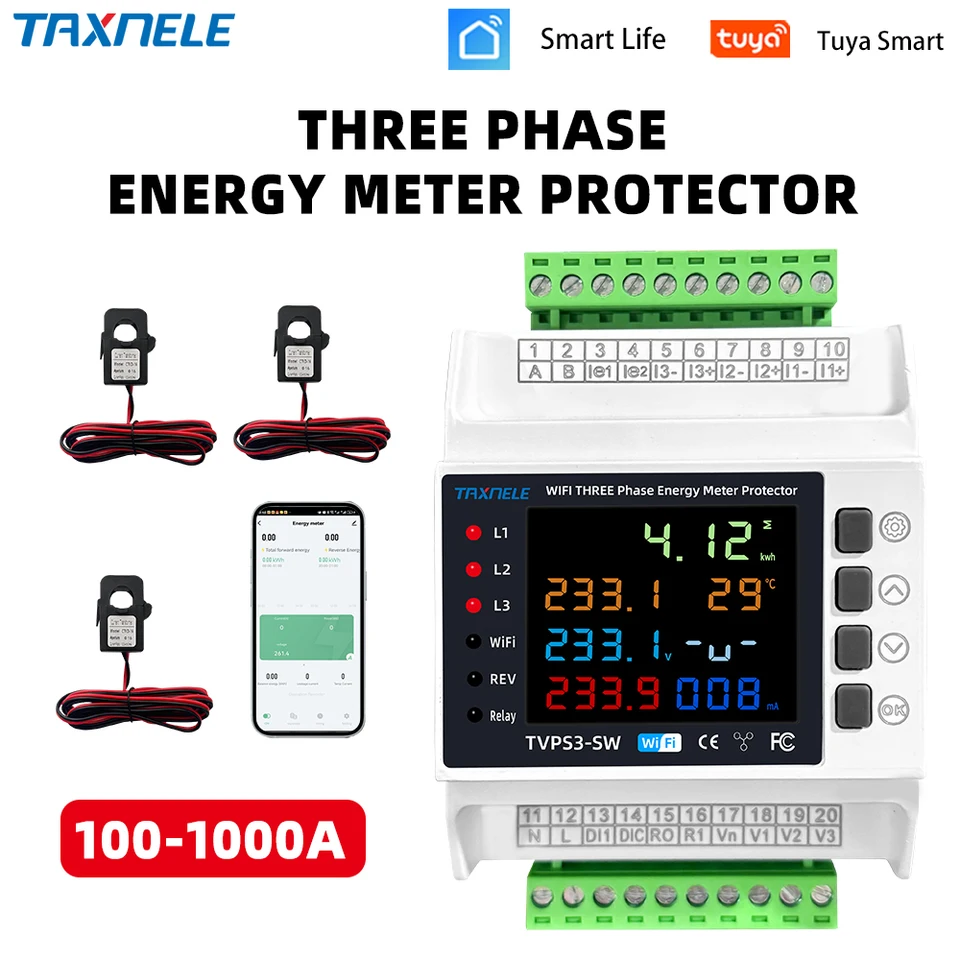
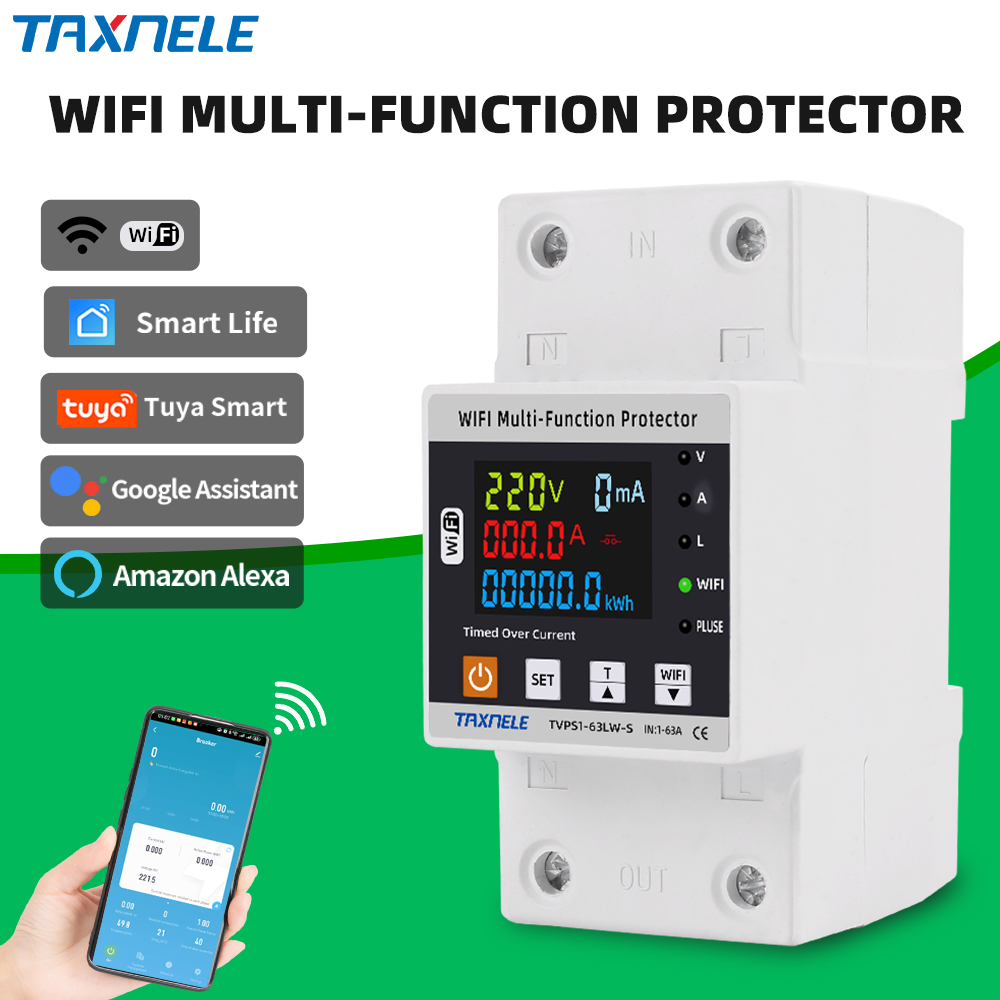
Integration of Tuya Wi-Fi, RS485 Modbus RTU, and cellular IoT allows facility managers to remotely monitor voltage line stability, track power phase dropouts, and trigger manual remote switchovers via smartphone apps.
Modular DIN-Rail Footprints
High-density engineering allows 2-Pole and 4-Pole 63A to 125A automatic transfer switches to fit directly into standard consumer unit DIN-rail cutouts, reducing cabinet footprint by up to 40%.
1. Integration of Bi-Directional Energy Measurement
With smart grids billing both energy consumption and solar feed-in energy, advanced changeover switch assemblies now integrate CT clamp power meters and digital energy analyzer displays directly inside the DIN-rail housing. Buyers are increasingly sourcing dual-power switches that combine voltage protection relays, current monitoring, and bidirectional energy tracking within a unified product unit.
2. Transition to Flame-Retardant V0 Polycarbonate Materials
Safety regulations across Europe, South America, and the Middle East strictly prohibit standard ABS plastics in commercial distribution boards. Global exporters must certify that switch housings utilize flame-retardant polyamide/polycarbonate composite materials passing 960°C glow-wire thermal resistance testing (UL94 V-0 standard).
Company Profile & B2B Export Advantages: Yueqing Favreau Electric Co., Ltd.
Headquartered in the famous Sulu Industrial Zone of Yueqing, Wenzhou, Zhejiang, Yueqing Favreau Electric Co., Ltd. is a specialized manufacturer and global exporter of low-voltage electrical protection, switching, and metering products. We integrate product R&D, precision manufacturing, strict quality assurance, and international export logistics under an ISO 9001 certified management framework.
Our product scope spans across 10 specialized low-voltage categories, including DIN-rail voltage protectors, DC solar circuit breakers, PV surge protection devices (SPD), Tuya smart Wi-Fi circuit breakers, digital energy meters, and high-reliability Dual Power Automatic Transfer Switches (ATS).
Verified Quality Assurance
SGS-assessed manufacturing plant equipped with automated surface-mount technology (SMT), wave-soldering lines, and 100% full-load electrical aging test benches before shipment.
Flexible OEM / ODM MOQ
Support low-volume trial procurement starting from just 10 pcs per standard model, with custom front-panel brand printing, local voltage calibration, and customized gift-box packaging.
Global Compliance & Logistics
Complete CE and RoHS test certificates on record. Seamless FOB, CIF, EXW, and DDP shipping solutions to over 80 countries in Europe, South America, the Middle East, and Africa.
Frequently Asked Questions (FAQ) for Dual Power Switch Importers
Here are expert engineering and trade answers to the most common questions asked by B2B buyers, distributors, and electrical project contractors when sourcing automatic transfer switches from China.
1. What is the fundamental difference between automatic transfer switches (ATS) and dual power changeover switches?
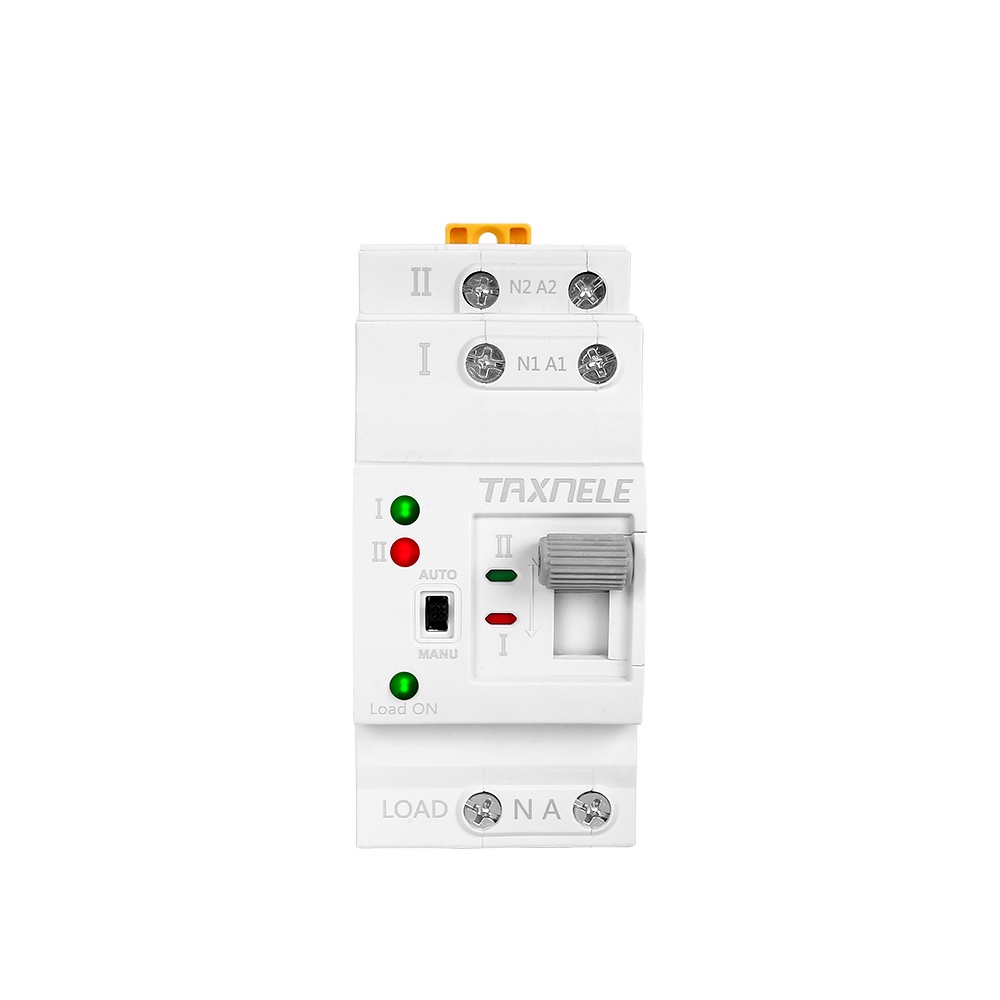
An Automatic Transfer Switch (ATS) contains built-in micro-controller logic or voltage sensing relays that automatically detect grid failure or phase loss and mechanically shift contacts to the auxiliary source without human intervention. A manual dual power changeover switch relies on an operator manually turning a rotary switch lever between positions "1 - 0 - 2". Modern DIN-rail ATS switches (like Favreau's Taxnele 63A series) offer dual modes: an automatic "Auto" position for instant self-switching, and a "Manual" toggle mode for maintenance isolation.
2. What contact transfer time is acceptable for uninterruptible home and office backup systems?
Standard industrial motor-driven transfer switches take between 100ms and 500ms to switch power sources, which may cause personal computers, Wi-Fi routers, or digital thermostats to reboot. Fast DIN-rail transfer switches manufactured by Favreau Electric feature optimized electromagnetic coil drives achieving contact switching times below 50 milliseconds (<50ms). For sensitive computer IT servers, combining an ATS with a small localized online UPS guarantees absolute uninterrupted uptime.
3. Should I order a 2-Pole (2P) or 4-Pole (4P) Dual Power Changeover Switch for my market?
The choice between 2P and 4P transfer switches depends strictly on the local electrical earthing topology (TN-S, TN-C-S, or TT systems). Single-phase residential applications (230V) utilize 2-Pole switches to disconnect both Phase and Neutral lines. Three-phase industrial applications (380V/415V) require 4-Pole switches when the neutral wire must be isolated during generator operation to prevent ground loop stray currents or residual current device (RCD) nuisance tripping.
4. What is the minimum order quantity (MOQ) and custom OEM delivery lead time for wholesale orders?
Our standard MOQ for stock DIN-rail changeover switches, MCBs, voltage protectors, and energy meters is 10 pieces per model. For private-label OEM orders—including laser-engraved customer logos, customized front panel artwork, modified tripping parameters, and custom retail box design—our typical production lead time is 10 to 15 working days following sample approval.
5. How do dual power automatic transfer switches handle grid return after power restoration?
Favreau ATS units feature prioritized line sensing logic. Grid Line A is configured as the primary preference source, while Generator/Storage Line B acts as the secondary backup. When primary power Line A recovers to normal operating voltage standards, the internal controller initiates a brief stabilization delay (to filter transient voltage spikes) and then automatically transfers the contact bridge back to Line A, placing Line B back on standby.
6. Are Favreau's low-voltage products certified for international tenders and distribution?
Yes. All low-voltage electrical protection products, circuit breakers, and automatic transfer switches manufactured by Yueqing Favreau Electric Co., Ltd. undergo rigorous third-party laboratory testing. Full CE (Low Voltage Directive 2014/35/EU and EMC Directive 2014/30/EU) and RoHS compliance certificates are available upon request. Furthermore, our factory operations and production facilities are verified onsite by SGS Group.
Partner with a Leading Dual Power Switch Exporter
Looking for reliable factory-direct pricing, customized OEM switchgear packaging, or technical engineering datasheets for your upcoming tender? Connect with our global support team today.