Featured Automatic Transfer Switches & Protection Line
Explore our export-tested dual power switching units, IoT smart breakers, solar DC isolators, and energy monitoring hardware engineered for industrial, commercial, and residential switchboards.




China Automatic Transfer Switch (ATS) Sourcing & Technical Analysis
A comprehensive examination of PC-Class vs. CB-Class topologies, dual power redundancy mechanics, solar PV microgrid integration, and factory-direct procurement strategies.
1. Technical Architectural Overview: Critical Power Continuity & Switching Mechanisms
In modern electrical distribution engineering, power continuity is paramount. An Automatic Transfer Switch (ATS) acts as the critical operational bridge between primary power sources (such as national municipal grids) and auxiliary/backup emergency power units (inverters, diesel generator sets, battery energy storage systems (BESS), or solar PV arrays). When main grid supply failures occur—including total blackouts, phase drops, frequency instability, under-voltage sags, or over-voltage spikes—the ATS automatically isolates the compromised grid and seamlessly transitions connected electrical loads to the alternative source.
From an engineering hardware standpoint, China's manufacturing sector produces two main structural classes of ATS equipment governing industrial and residential switchboards:
• PC-Class ATS: Built using double-throw contactor assembly without integral overcurrent trip mechanisms. Designed specifically to withstand high short-time withstand currents (Icw) without contact welding. Ideal for applications requiring ultra-high reliability and high-frequency switching.
• CB-Class ATS: Constructed using dual interconnected Miniature Circuit Breakers (MCB) or Molded Case Circuit Breakers (MCCB) equipped with thermal-magnetic or electronic trip units. Provides integrated overcurrent and short-circuit protection alongside power transfer functionality.
When specifying dual power automatic transfer switches for global B2B procurement, understanding contact material composition is equally vital. Top China ATS factories utilize high-density Silver Cadmium Oxide (AgCdO) or eco-compliant Silver Tin Oxide (AgSnO2) alloy contacts. AgSnO2 exhibits superior resistance to electrical arc erosion and contact welding under high surge inductive motor loads (AC-33B duty rating according to IEC 60947-6-1 standards).
2. Switching Speed Dynamics: Millisecond Transfer vs. Zero-Crossing Technology
For sensitive electronic hardware, data servers, medical facilities, and automated industrial PLC systems, transfer latency dictates operational uptime. Traditional motorized switches can require transfer times between 1.5 to 3 seconds. However, modern Din-Rail Mini ATS (such as Favreau's 2P, 3P, and 4P series) utilize high-speed electromagnetically driven mechanism solvers capable of switching in under 50 milliseconds (<50ms).
| ATS Switching Architecture | Typical Transfer Time | Primary Application Environment | IEC Standard Rating |
|---|---|---|---|
| Solenoid Fast Transfer (Mini Din-Rail) | 15ms – 45ms | Residential Inverter/Grid, Telecom Base Stations | IEC 60947-6-1 / AC-33iB |
| Motorized Switch-Disconnector (PC Class) | 100ms – 500ms | Commercial Buildings, Industrial Distribution | IEC 60947-6-1 / AC-33B |
| Dual MCB Interlocking (CB Class) | 1.0s – 2.5s | Standard Backup Generators, HVAC Systems | IEC 60947-2 / IEC 60947-6-1 |
| Solid State Static Transfer Switch (STS) | < 5ms (Seamless) | Mission-Critical Data Centers, Semiconductor Plants | IEC 62310-3 |
By incorporating zero-crossing switching logic, advanced ATS controllers initiate contact separation precisely at the zero voltage point of the AC sine wave. This minimizes transient electrical noise, arc discharge temperature, and voltage spike propagation across municipal mains and generator supply legs.
3. Future Trends in B2B ATS Procurement (2025–2030)
As global energy infrastructure rapidly transitions toward decentralized renewable energy microgrids, the role of Automatic Transfer Switches is undergoing a massive technological transformation. B2B buyers, electrical wholesalers, and switchboard original equipment manufacturers (OEMs) must align procurement with four major industry dynamics:
Solar Photovoltaic & Energy Storage (BESS) Integration
Modern ATS units must natively handle bidirectional power flow. With solar PV systems feeding energy back to grid networks or drawing from off-grid battery inverters, transfer switches require reinforced arc chutes and double-break contacts to isolate high DC component noise and frequency variations.
IoT Cloud Connectivity & Smart App Telemetry
Integration of Tuya Smart, Smart Life, and Modbus-RTU RS485 protocols directly into ATS logic controls allows electrical engineers and site managers to monitor voltage sags, power factor, historical transfer logs, and current consumption in real time via smartphone applications or central SCADA systems.
Multi-Protection Hybrid Convergent Design
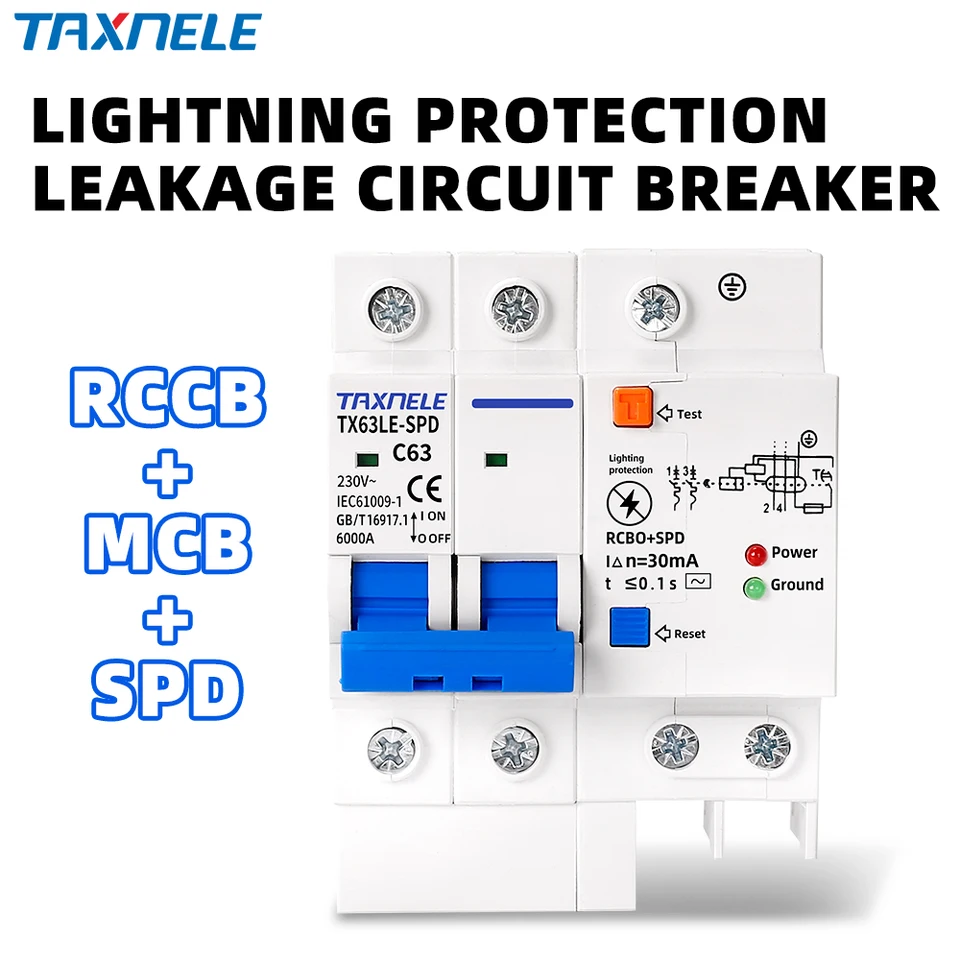
Market demand is rapidly shifting away from standalone transfer switches toward unified protective units. Modern buyers prefer hybrid ATS units integrating digital over/under-voltage relays, residual current device (RCD/RCBO) earth-leakage sensors, and surge protective devices (SPD) within a compact Din-Rail housing.
Eco-Friendly Flame-Retardant Polymer Housings
Stricter global fire safety standards (UL94-V0 rated self-extinguishing thermosetting and thermoplastic housings) are replacing lower-grade plastics. Chinese factories using pure virgin polybutylene terephthalate (PBT) and polyamide 66 (PA66) ensure high heat deflection temperatures and zero toxic halogen emissions.
Why Partner with Yueqing Favreau Electric Co., Ltd.?
Located in Wenzhou, Zhejiang—China's global capital for low-voltage electrical manufacturing—Favreau combines state-of-the-art production technology with stringent quality testing.
SGS Assessed & ISO 9001 Factory Audit
Favreau's physical production facilities, assembly lines, automated SMT machinery, and warehouse capacity have undergone independent onsite inspection and verification by SGS Group. Certified compliance with ISO 9001 quality management ensures repeatable precision.
Full International Compliance (CE & RoHS)
Every ATS model, smart circuit breaker, DC isolator, and voltage protection relay manufactured by Favreau is engineered to meet or exceed international safety benchmarks, carrying full CE certification and RoHS environmental clearance for rapid customs entry into Europe, South America, and Asia.
Flexible B2B Customization (OEM & ODM)
We empower importers and distributors with custom branding options: custom front panel silk-screening, custom trip parameters adjusted for volatile local grids, multi-language instruction manuals, bespoke color boxes, and low minimum order quantities (MOQ starting from 10 pcs for standard units).
Frequently Asked Questions on ATS Procurement & Engineering
Expert answers addressing switching parameters, earthing topologies, installation standards, and bulk procurement logistics.
What is the main difference between 2P, 3P, and 4P Automatic Transfer Switches?
• 2P ATS: Switches 1 Phase line + 1 Neutral line. Used in single-phase 220V/230V residential installations.
• 3P ATS: Switches 3 Phase lines (L1, L2, L3) without switching the neutral conductor. Used in 3-phase 380V/400V industrial installations where a common solid ground/neutral is maintained.
• 4P ATS: Switches 3 Phase lines + Neutral line. Mandatory in TT earthing networks or dual-source systems (Grid + Generator) to prevent neutral ground loop currents, dangerous potential rises, or improper tripping of upstream Residual Current Devices (RCD/RCBO).
Can a Din-Rail Mini ATS be connected directly between a Solar Inverter and Municipal Grid?
What is the operational lifespan and electrical switching durability of Favreau ATS units?
How does auto-reclosing and over/under-voltage protection work in intelligent smart ATS models?
What are the minimum order quantities (MOQ) and lead times for wholesale & OEM orders?
What thermal derating factor should be applied when installing ATS in hot climates?
Partner with China's Premier ATS & Protection Component Manufacturer
Request factory-direct B2B wholesale pricing, request engineering sample packages, or consult our technical team regarding OEM project specifications.