High-Performance Circuit Protection & Control Devices
Select from OEM/ODM export-ready miniature circuit breakers, surge arresters, smart IoT relays, and dual-power transfer switches designed for unstable grid resilience.
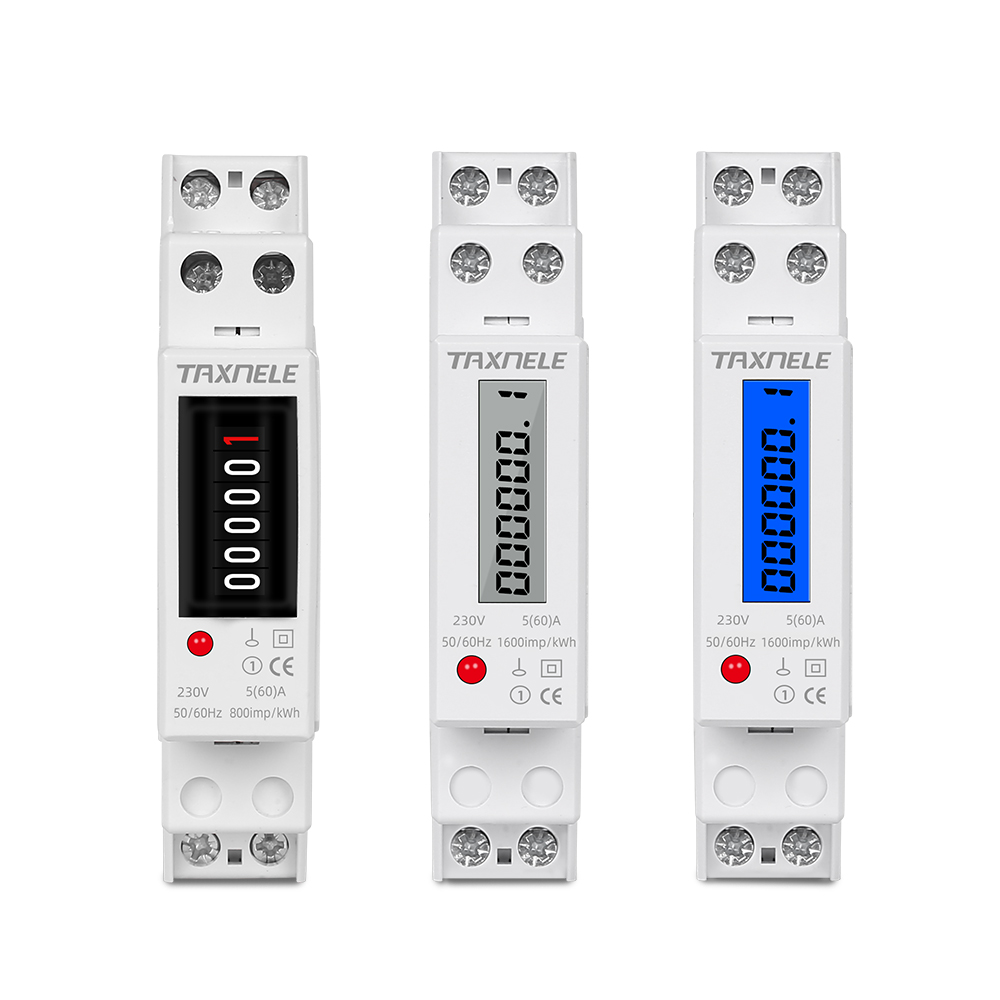
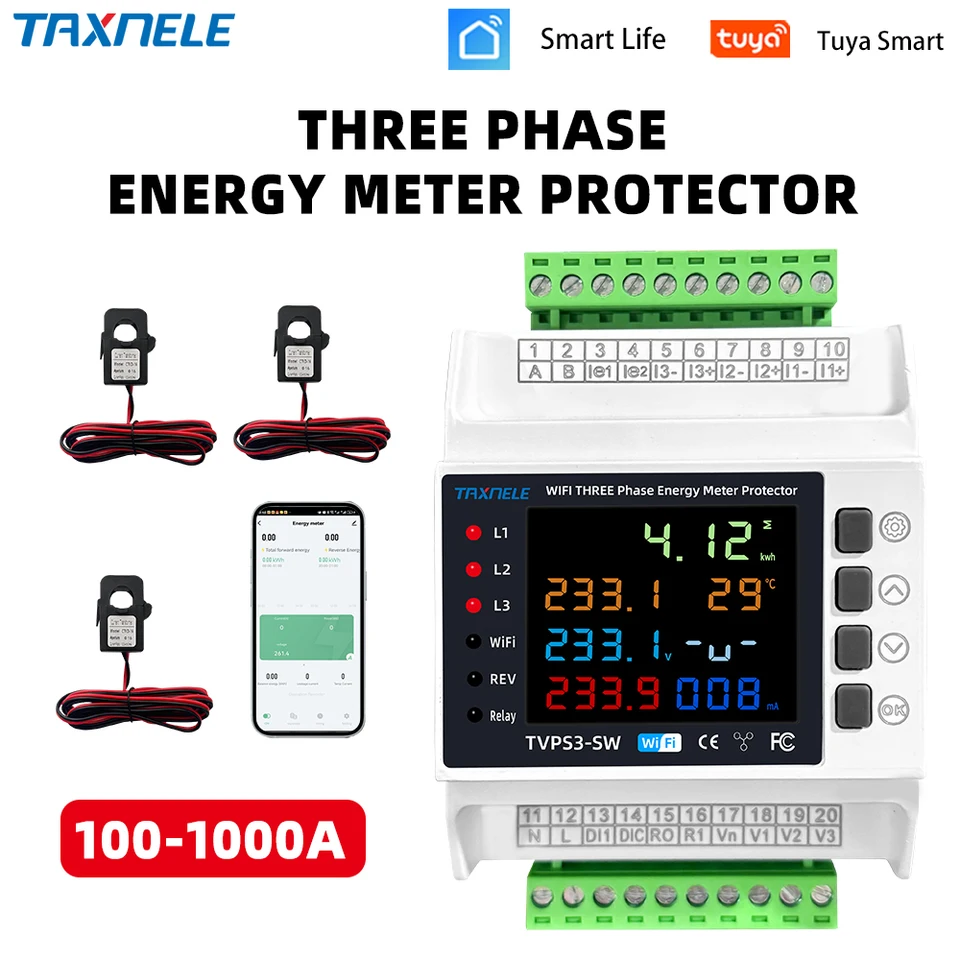


1. Technical Fundamentals of Short-Circuit Protection Breakers
In modern electrical distribution architecture, a short circuit represents one of the most severe electrical fault conditions. Occurring when a low-resistance path is unintentionally established across an energized AC or DC circuit, fault currents ($I_k''$) can rapidly surge to thousands of amperes within milliseconds. Without robust, high-speed interruption mechanisms, the resulting thermal dissipation ($I^2t$) causes explosive conductor vaporization, insulation destruction, and severe catastrophic equipment failure.
Selecting an authoritative short circuit protection breaker supplier requires an in-depth understanding of physics-based arc quenching, contact dynamics, and tripping curve kinetics. Modern Miniature Circuit Breakers (MCBs) and Molded Case Circuit Breakers (MCCBs) rely on dual-trip mechanisms: a thermal bimetallic strip for inverse time-delayed overload protection, and an instantaneous electromagnetic solenoid for sub-cycle short-circuit interruption.
Engineering Distinction: Short-circuit protection differs fundamentally from overload protection. Overload protection responds to sustained currents moderately above rated current ($1.05 \times I_n$ to $1.45 \times I_n$), whereas short-circuit protection must isolate high-magnitude fault currents ($5 \times I_n$ up to $20 \times I_n$ or higher) in under 5 to 10 milliseconds to prevent upstream transformer tripping and panel fires.
Arc Quenching Mechanics in AC vs. DC Short-Circuit Interruptions
Alternating current (AC) interruption naturally benefits from a periodic voltage zero-crossing every 8.3 milliseconds (at 60 Hz) or 10 milliseconds (at 50 Hz), which assists in extinguishing the electric arc drawn between opening silver-alloy contacts. However, Direct Current (DC) applications—such as solar PV arrays, battery energy storage systems (BESS), and EV charging hubs—lack a natural zero-crossing point. The continuous DC voltage maintains the ionization channel, making arc suppression significantly harder.
To overcome this, specialized DC short-circuit breakers incorporate permanent magnetic blowout fields. As contacts separate, the magnetic field exerts a Lorentz force on the charged arc column, forcing it rapidly off the contacts and driving it into an arc chute fitted with nickel-plated steel de-ion plates. Here, the long arc is split into multiple series micro-arcs, cooled, and extinguished instantly.
Type B Trip Curve
Trips instantaneously between $3 \times I_n$ and $5 \times I_n$. Engineered primarily for resistive loads, long cable runs, and sensitive electronic equipment protection.
Type C Trip Curve
Trips instantaneously between $5 \times I_n$ and $10 \times I_n$. The global commercial standard for inductive lighting circuits, general appliances, and small transformers.
Type D Trip Curve
Trips instantaneously between $10 \times I_n$ and $20 \times I_n$. Formulated for high inrush inductive loads such as industrial electric motors, pumps, and heavy HVAC units.
2. Industry Trends Shaping Next-Generation Circuit Breaker Procurement
As global electrification accelerates and renewable energy integration reshapes low-voltage distribution architecture, procurement engineers must evaluate circuit breaker exporters through the lens of emerging technology. The global market is transitioning from purely electromechanical devices toward intelligent, digital, and high-voltage DC protection systems.
Trend 1: Proliferation of Smart IoT Breakers & Telemetry Integration
Traditional circuit breakers operate passively, tripping only when physical current thresholds are breached. Modern enterprise facilities demand real-time diagnostics. Exporters are rapidly adopting IoT integration (such as Tuya WiFi, Zigbee, and Modbus RS485 communication protocols). Smart miniature circuit breakers enable remote telemetry of voltage, current, power factor, bimetal temperature, and power consumption (kWh), allowing industrial facility managers to execute predictive maintenance before a short circuit occurs.
Trend 2: Ultra-High Voltage DC Protection (1000V–1500V DC)
Commercial solar installations and utility-scale BESS have migrated from 600V DC strings to 1000V DC and 1500V DC topologies to minimize resistive cable losses. Short-circuit breaker manufacturers have responded by developing multi-pole series-connected MCBs and Molded Case DC Circuit Breakers with reinforced arc chutes, capable of breaking DC short-circuit currents up to 10kA–20kA cleanly without structural housing rupture.
Trend 3: Solid-State Circuit Breakers (SSCB) Development
While electromechanical breakers clear faults within 3 to 10 milliseconds, Solid-State Circuit Breakers utilizing Silicon Carbide (SiC) and Gallium Nitride (GaN) power semiconductors can clear short circuits in under 1 to 10 microseconds. Although traditional mechanical MCBs maintain dominance due to cost-efficiency and physical galvanic isolation, hybrid breakers combining mechanical contacts with solid-state switches are entering the high-end market.
3. B2B Selection Matrix: Parameter Evaluation for Importers
When procuring short-circuit breakers from global suppliers and exporters, international buyers must verify that the technical specifications match local regulatory compliance standards (IEC/EN 60947-2 for industrial applications, IEC/EN 60898-1 for household/residential installations, and UL 489 for North American markets).
| Parameter Symbol | Technical Term | Engineering Significance | Target Standard Value |
|---|---|---|---|
| $I_n$ | Rated Current | Continuous RMS current the breaker handles without nuisance tripping at reference ambient temperature. | 6A, 10A, 16A, 25A, 32A, 63A, 100A, 125A |
| $I_{cu}$ | Ultimate Short-Circuit Breaking Capacity | Maximum short-circuit current the breaker can interrupt twice (O - t - CO cycle) without becoming unsafe. | 4.5kA, 6kA, 10kA, 15kA, 25kA |
| $I_{cs}$ | Service Short-Circuit Breaking Capacity | Fault current magnitude the breaker can clear repeatedly and remain fully operational without calibration loss. | Typically 50%, 75%, or 100% of $I_{cu}$ |
| $U_i$ | Rated Insulation Voltage | Maximum dielectric testing voltage the housing and contact gap withstand safely. | 500V AC / 1000V DC |
| $U_{imp}$ | Rated Impulse Withstand Voltage | Peak transient overvoltage spike (e.g., lightning strikes) the device withstands without flashover. | 4kV, 6kV, 8kV |
| Tripping Curve | Instantaneous Trip Characteristics | Determines instantaneous magnetic trip current multiplier relative to rated nominal current ($I_n$). | Curve B (3-5x), Curve C (5-10x), Curve D (10-20x) |
4. Supply Chain Evaluation: Top 10 Global Short Circuit Protection Breaker Exporters
The global circuit breaker supply chain is categorized into two main tiers: Tier-1 multinational engineering conglomerates that establish baseline technology patents, and specialized Tier-2 high-volume OEM/ODM manufacturers based in strategic manufacturing clusters such as Yueqing, Wenzhou, China. Below is an overview of the top 10 suppliers and exporters driving the market in 2025:
1. Schneider Electric (France)
Global leader in low and medium voltage switchgear. Recognized for high-end Acti9 series with exceptional breaking capacity and digital integration.
2. ABB (Switzerland)
Pioneer in high-speed magnetic trip technologies and industrial MCCBs. Sets benchmarks in heavy industrial fault protection.
3. Siemens (Germany)
Famous for SENTRON series protection devices. Renowned for strict precision engineering and thermal dissipation design.
4. Yueqing Favreau Electric Co., Ltd. (China)
Specialized export-driven enterprise in Yueqing, Wenzhou. Known for flexible OEM/ODM, low 10-pc MOQ, CE/RoHS certification, and integrated solar DC/smart breaker manufacturing.
5. Eaton (USA)
Dominant player in North American NEMA and UL 489 circuit breaker markets with robust industrial molded-case solutions.
6. Legrand (France)
Leading supplier for residential and commercial distribution boards, offering modular din-rail breakers with aesthetic design.
7. Mitsubishi Electric (Japan)
Asia-Pacific industrial powerhouse producing ultra-reliable breakers with superior contact anti-welding technology.
8. Chint Electrics (China)
Massive production volume exporter serving infrastructure and utility sectors across emerging markets worldwide.
9. Fuji Electric (Japan)
Specializes in compact circuit breakers for machinery, robotics, and complex automated control panels.
10. Hyundai Electric (South Korea)
Strong exporter of heavy marine-grade and industrial circuit breakers designed for harsh environments, marine vessels, and power plant distribution infrastructure.
Why Global B2B Importers Partner with Yueqing Favreau Electric Co., Ltd.
Located in the Sulu Industrial Zone of Yueqing, Wenzhou—China's world-famous low-voltage electrical manufacturing hub—Yueqing Favreau Electric integrates R&D, precision manufacturing, and international trade. We specialize in solving electrical protection challenges for regions with unstable power grids and expanding solar installations.
-
✓SGS Onsite Audited Factory: Premises, production capability, and quality control verified by independent SGS Group assessment.
-
✓Certified Product Compliance: CE, RoHS, and ISO 9001 certified operations ensuring international export market entry.
-
✓Agile OEM & ODM Customization: Private label branding, custom trip curve tuning, customized front-panel artwork, and localized packaging from a low 10-piece MOQ.
-
✓Advanced Automated Production Line: Equipped with automatic wave-soldering machines, surface mount technology (SMT) placement, and 100% dielectric & trip calibration testing.
-
✓Complete Protection Ecosystem: Single supplier for DC solar breakers, surge protective devices (SPD), Tuya smart WiFi MCBs, automatic transfer switches (ATS), and digital energy meters.
Frequently Asked Questions for Importers & Distributors
Clear engineering and business answers to streamline your electrical protection supply chain.