


Solar Photovoltaic Protection Architecture & OEM Factory Selection Strategy
Authored by Senior Electrical Safety & OEM Procurement Strategy Group | Yueqing Favreau Electric Co., Ltd.
Executive Abstract: As global photovoltaic (PV) utility arrays and residential Battery Energy Storage Systems (BESS) escalate in system voltage from 600VDC to 1000VDC and 1500VDC, selecting an authoritative, direct-manufacturing OEM factory for Direct Current Miniature Circuit Breakers (DC MCBs) becomes a vital risk-mitigation step. This engineering report details non-zero-crossing arc extinction kinetics, permanent magnet magnetic blowout mechanisms, temperature derating matrices, and international OEM procurement trends.
1. Engineering Fundamentals: Physics of DC Arc Suppression vs. Standard AC Breaking
The fundamental distinction between Alternating Current (AC) protection and Direct Current (DC) protection lies in the electrical wave dynamic. AC electricity naturally crosses the zero-voltage threshold 100 or 120 times per second (at 50Hz or 60Hz), offering an intrinsic thermal window for the plasma arc to cool, de-ionize, and extinguish within standard contact gaps. Conversely, Direct Current maintains a continuous, uninterrupted magnitude. When contacts separate under high-voltage DC load conditions (such as a 1000VDC solar string carrying short-circuit current from a high-irradiance array), a sustained high-temperature electric plasma arc forms immediately. Without specialized physical and electromagnetic intervention, this arc can exceed temperatures of 5,000°K, causing thermal melting of contact material, sustained ionization, catastrophic phase-to-ground flashover, and severe enclosure fire hazards.
At Yueqing Favreau Electric Co., Ltd., our OEM solar DC circuit breakers are engineered specifically to overcome continuous DC arc persistence. Incorporating a multi-stage arc splitter chamber (arc chute) equipped with up to 13 de-ionization steel plates alongside high-coercivity permanent neodymium magnetic blowout units, the plasma arc is electromagnetically driven away from the silver-alloy contact tips instantly upon separation. The magnetic field forces the plasma column into the narrow splitter plates, elongating the arc path, cooling the gaseous ions, and building a back-electromotive force (Back-EMF) that exceeds the applied system voltage, forcing arc extinction in under 10 milliseconds.
Permanent Magnet Blowout
Integrated high-flux magnetic runners pull the electric plasma arc into the arc splitter plates regardless of current direction, preventing localized contact erosion and thermal failure in PV strings.
Silver-Alloy Contact Matrix (AgSnO2)
Utilizing Silver Tin Oxide contact tips provides high arc erosion resistance, anti-welding properties under heavy inrush currents, and exceptional electrical conductivity over thousands of switching operations.
2. Technical Selection Guide: PV String Calculation & Thermal Derating
System designers and B2B buyers must accurately dimension DC Miniature Circuit Breakers (MCBs) and Molded Case Circuit Breakers (MCCBs) according to array open-circuit voltage ($U_{oc}$), short-circuit current ($I_{sc}$), ambient operating temperature profiles, and string insulation safety coefficients. Under IEC 60947-2 (Low-voltage switchgear and controlgear - Part 2: Circuit-breakers) and GB/T 14048.2 guidelines, improper breaker selection leads either to nuisance tripping under peak solar irradiance or complete protection failure during insulation faults.
Core Mathematical Formulas for Solar DC MCB Sizing:
1. Rated Voltage Requirement: Un ≥ Uoc (STC) × [1 + αUoc × (Tmin - 25)]
2. Rated Current Requirement: In ≥ 1.25 × Isc (STC)
Where αUoc is the open-circuit voltage temperature coefficient (%/°C), Tmin is the minimum site temperature, and 1.25 is the continuous load thermal margin factor mandated by international solar codes.
| Breaker Type & Model | Rated Voltage (Ue) | Rated Current Range (In) | Ultimate Breaking Capacity (Icu) | Primary Solar & Industrial Application |
|---|---|---|---|---|
| 2P DC Mini Circuit Breaker | DC 500V / 800V / 1000V | 6A, 10A, 16A, 20A, 25A, 32A, 40A, 50A, 63A | 6.0 kA (IEC 60947-2) | Residential & Commercial PV String Inverters, DC Combiner Boxes |
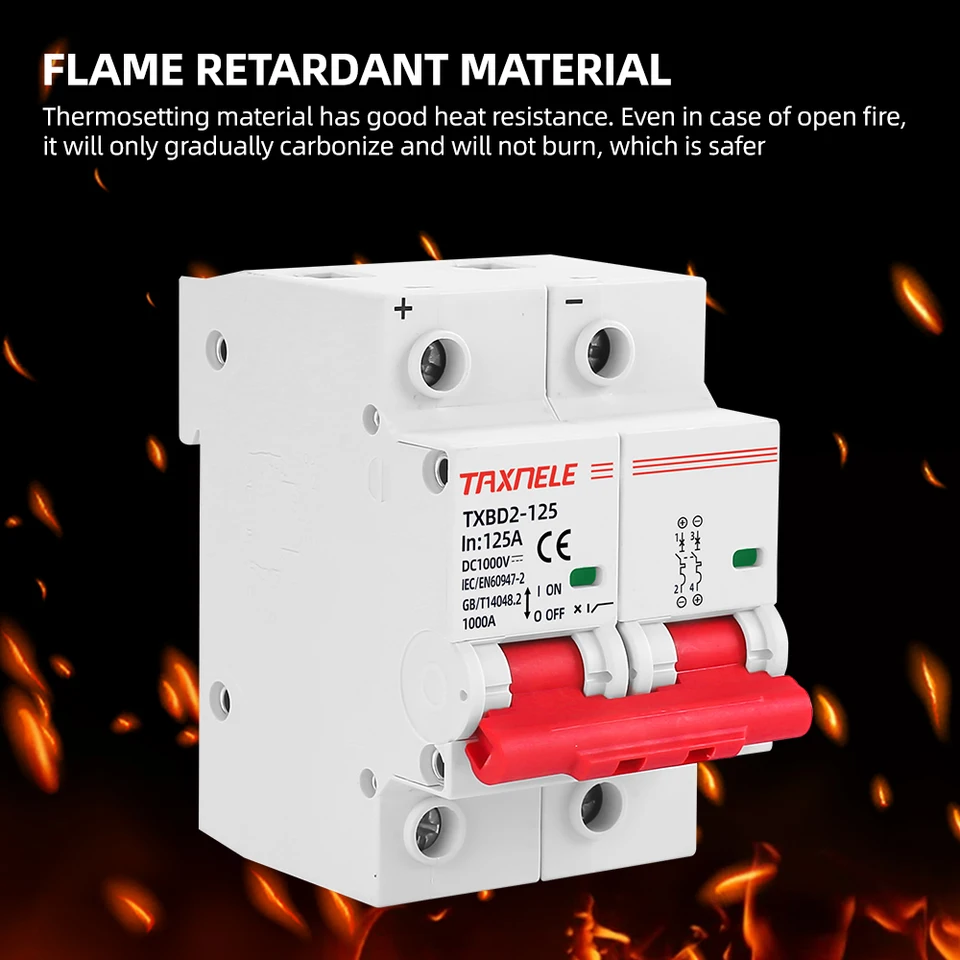
| 2P High-Current DC MCB | DC 1000V | 80A, 100A, 125A | 10.0 kA | Centralized Battery Storage Systems (BESS), High-Output DC Buses |
| DC Molded Case Breaker (MCCB) | DC 1000V / 1500V | 150A, 200A, 250A | 20.0 kA - 35.0 kA | Utility-Scale Solar Farm Re-combiners, Commercial Energy Storage Units |
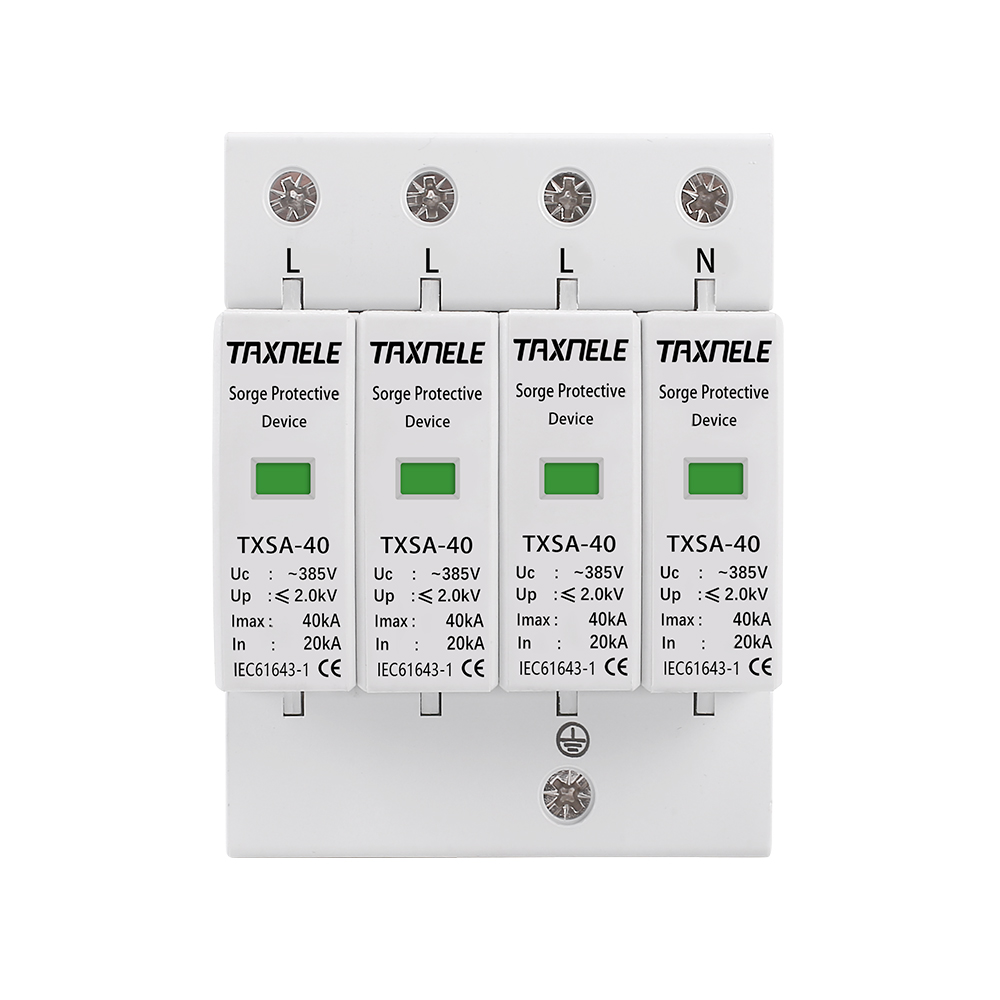
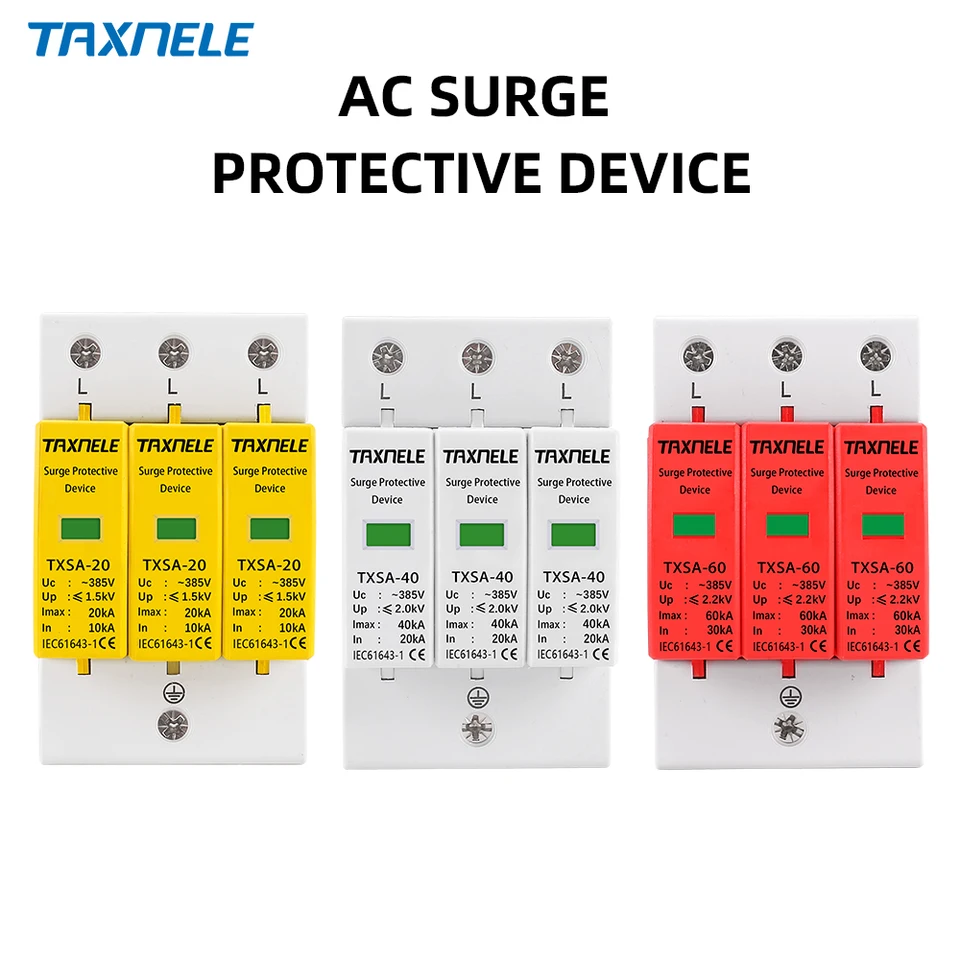
| Solar PV DC SPD (Type 2) | DC 600V / 800V / 1000V | In: 20kA / Imax: 40kA - 60kA | Up ≤ 3.6 kV | Atmospheric Induced Lightning Surge Suppression at Inverter Input |
3. 2025–2030 Global PV Protection Procurement Trends & Market Drivers
As the renewable energy transition accelerates globally, low-voltage protection procurement dynamics are shifting rapidly across Europe, Latin America, the Middle East, Southeast Asia, and Africa. B2B buyers, system integrators, and electrical wholesalers are no longer searching merely for standard off-the-shelf breakers; they require customized OEM/ODM agility, advanced telemetry integration, and rigid environmental compliance.
Trend 1: Rapid Adoption of 1500VDC Architecture
Utility-scale solar farms and large C&I rooftops are migrating from 1000VDC to 1500VDC topology to reduce Balance of System (BOS) cabling costs by up to 18%. Breaker OEM suppliers must supply compact molded-case units capable of clearing high short-circuit currents at 1500VDC without physical casing distortion.
Trend 2: Convergence of IoT & Remote Power Control
Smart distribution boards increasingly demand integrated Wi-Fi, RS485 Modbus, or Tuya IoT micro-controller modules. Modern circuit breakers must double as real-time power monitors, reporting voltage drops, residual leakage current, and energy consumption straight to cloud dashboards.
Trend 3: Hybrid Solar-BESS Dual-Polarity Requirements
With energy storage batteries charging and discharging bidirectionally, protection devices must feature non-polarized arc extinction chambers. Non-polarized DC MCBs ensure full breaking capability whether current flows from solar array to battery or from battery into inverter grid tie.
Trend 4: Demand for Small-Batch Customization (Low MOQ OEM)
Global distributors require tailored trip threshold curves, local language front-panel laser etching, and branded artwork boxes without taking on massive inventory risks. OEM suppliers offering low MOQ thresholds (starting from 10 pieces) gain a massive competitive footprint.
4. Technical Procurement FAQ: Answers for Importers, Panel Builders & Engineering EPCs
Why is it dangerous to use a standard AC circuit breaker in a DC Solar PV string?
What is the difference between Polarized and Non-Polarized DC Circuit Breakers?
How does ambient temperature inside an outdoor IP65 Combiner Box affect breaker rating?
What certifications and factory quality audits are available for Favreau OEM electrical products?
What is the turn-around time for OEM logo printing, custom packaging, and sample orders?
5. Manufacturer Excellence: Why Partner with Yueqing Favreau Electric Co., Ltd.
Nestled in Wenzhou's famous Sulu Industrial Zone—China's primary hub for low-voltage electrical engineering innovation—Yueqing Favreau Electric Co., Ltd. serves as a reliable manufacturing backbone for electrical distributors, panel builders, and solar system integrators worldwide. We unite research & development, precision tooling, automated assembly, and strict QC testing under one roof.
Unlike trading intermediaries, our factory offers direct control over component selection—from flame-retardant VO-grade polycarbonate (PC) housings to silver-cadmium free contact rivets and precision bimetal trip strips. Whether you require standard 1P-4P AC surge protection modules, 1000VDC 125A battery switches, smart Tuya-enabled remote breakers, or pre-assembled IP65 PV combiner boxes, Favreau provides low MOQs, factory-direct pricing, and complete technical compliance packages.