


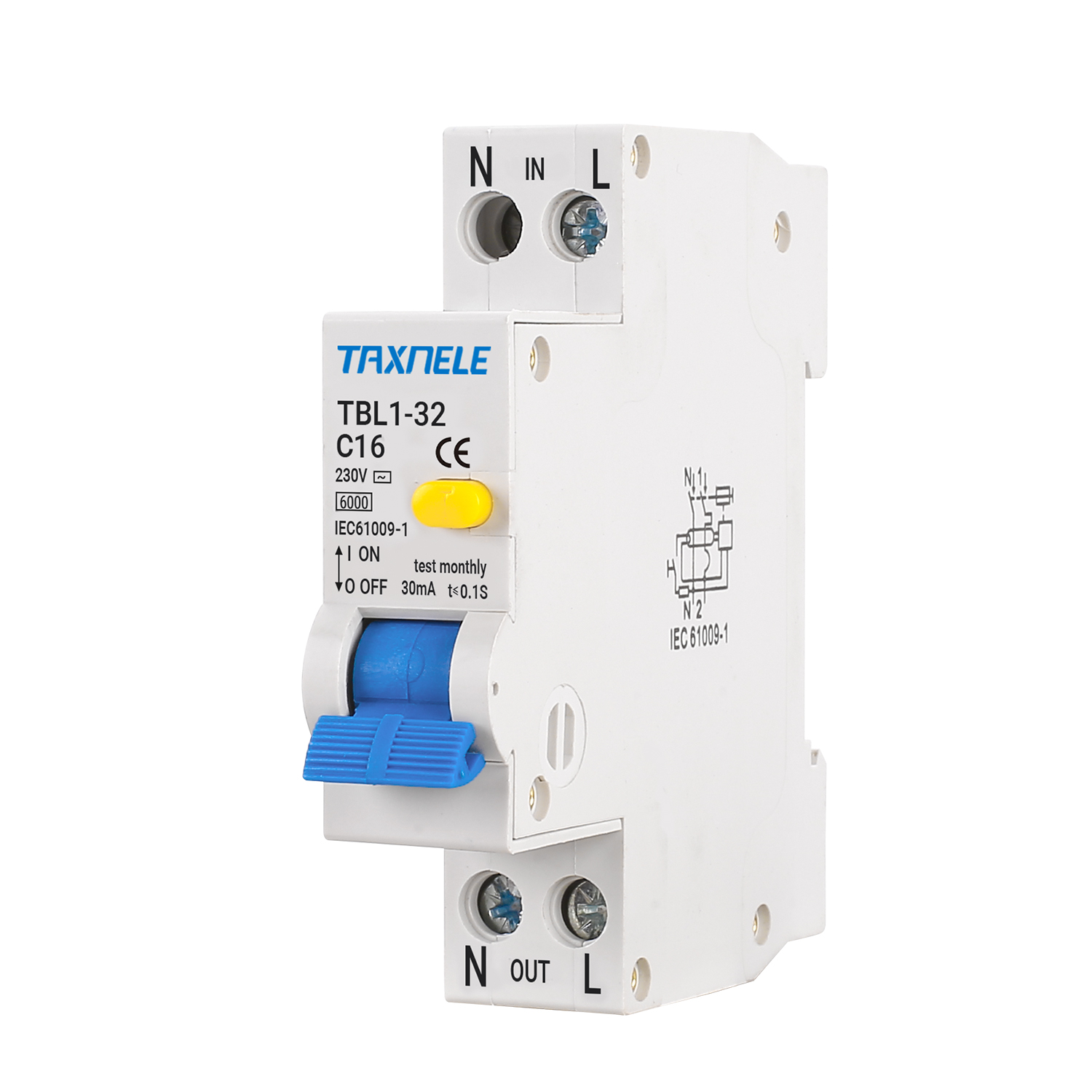
Technical Whitepaper: Engineering Considerations for Photovoltaic DC Circuit Breakers
As solar photovoltaic (PV) array capacities scale globally across residential rooftops, commercial rooftops, and utility-scale solar farms, system operational safety heavily relies on dedicated Direct Current (DC) circuit protection devices. Unlike traditional Alternating Current (AC) electrical distribution systems, DC electrical arcs do not naturally experience a "zero-crossing" current point. When an electrical fault occurs within a high-voltage DC solar string, the sustained current flow can generate violent continuous arcs capable of causing severe equipment damage, electrical fires, and thermal runaway.
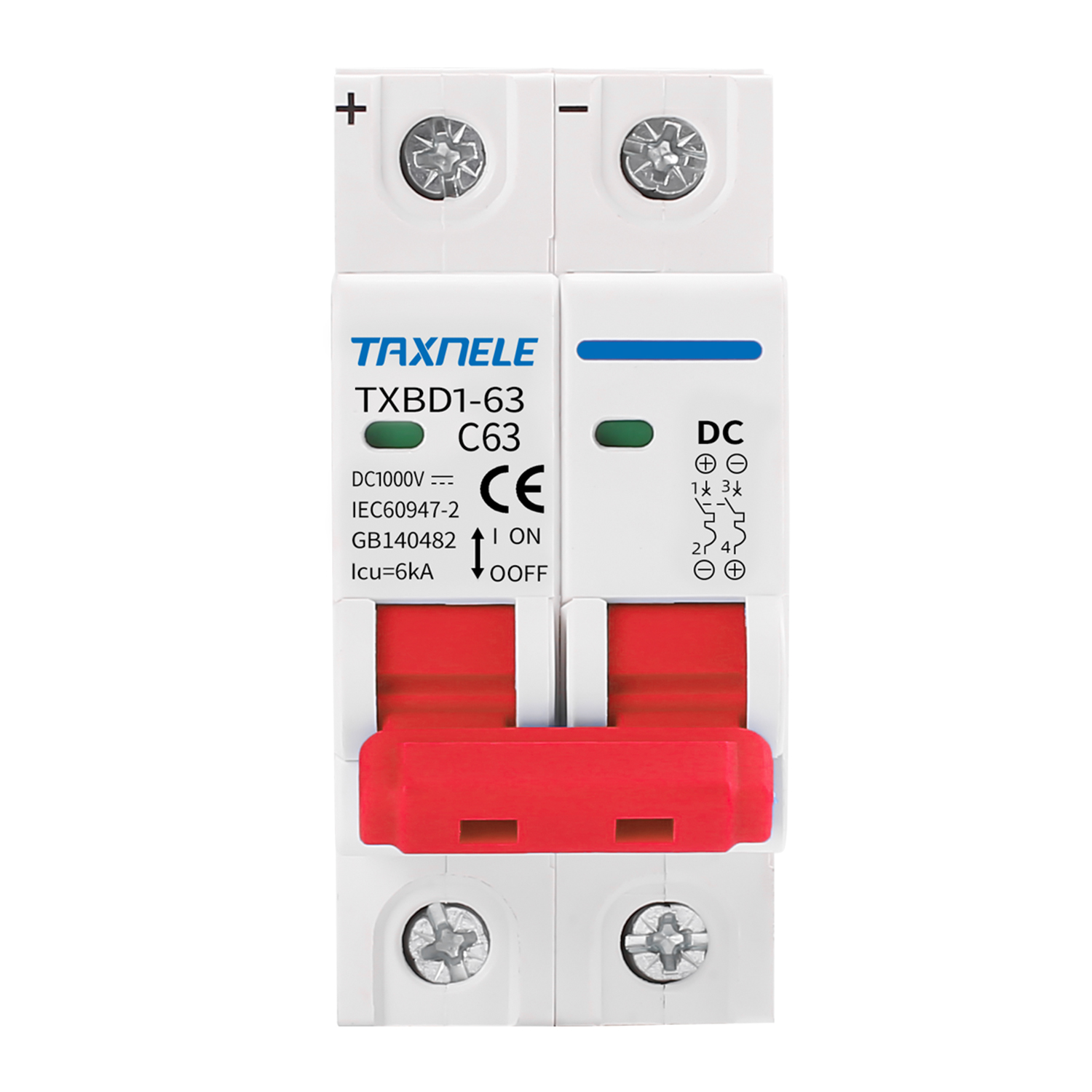
A specialized Custom OEM PV DC Circuit Breaker is designed to overcome the unique physical challenges of DC arc interruption. Through optimized thermal-magnetic trip units, permanent magnet blowout fields, and reinforced arc chutes, modern DC miniature circuit breakers (DC MCBs) provide rapid isolation of fault currents, protecting photovoltaic modules, battery energy storage systems (BESS), and power conversion inverters.
1. Physics of DC Arc Extinguishing & Arc Chamber Mechanics
The primary engineering challenge in low-voltage photovoltaic protection lies in the physical nature of Direct Current. In a 50Hz or 60Hz AC circuit, the voltage and current cross zero twice per cycle, providing a natural thermodynamic window for dielectric recovery between breaker contacts. In DC circuits—operating at voltages up to 1000V DC or 1500V DC—the current is continuous and constant.
To safely extinguish a DC arc, our engineering team integrates high-coercivity permanent magnets adjacent to the contact arc splitter plates. When the contacts separate during an overcurrent event:
- Lorentz Force Acceleration: The magnetic field generated by the built-in permanent magnets exerts an electromagnetic Lorentz force ($F = q(\mathbf{E} + \mathbf{v} \times \mathbf{B})$) on the charged plasma of the electric arc.
- Arc Lengthening & Splitting: This force rapidly drives the arc off the main contact tips and forces it into the arc chute array, which consists of multiple insulated copper-plated steel splitter plates.
- Thermodynamic Cooling & Deionization: As the single high-energy arc is divided into smaller series arcs, its overall arc voltage ($V_{arc}$) increases dramatically until it exceeds the system supply voltage ($V_{sys}$), extinguishing the arc in under 10 milliseconds.
Rapid Arc Extinguishing
Utilizes directional magnetic blowout technologies to drive plasma arcs into splitters within 10ms.
Non-Polarized Wiring
Prevents catastrophic mis-wiring failures during installation in bidirectional energy storage systems.
Wide Amperage Spectrum
Full customization range from 6A to 63A MCBs up to 250A Molded Case Circuit Breakers (MCCB).
2. Selection Matrix: DC MCB vs. DC MCCB vs. DC Disconnector Switch
B2B importers, solar OEMs, and engineering procurement contractors (EPCs) must carefully select circuit protection components based on system location, short-circuit current ratings ($I_{sc}$), and operational duty cycles. Below is a structured selection breakdown:
| Device Category | Voltage Range | Current Rating | Breaking Capacity ($I_{cu}$) | Primary Application |
|---|---|---|---|---|
| DC Miniature Circuit Breaker (MCB) | 12V to 1000V DC | 6A - 63A | 6 kA - 10 kA | Solar PV String Protection, Micro-inverters, Battery Banks |
| DC Molded Case Circuit Breaker (MCCB) | 250V to 1500V DC | 100A - 250A+ | 15 kA - 50 kA | Combiner Box Output, Commercial Inverters, BESS Cabinets |
| DC Isolator / Switch-Disconnector | 300V to 1200V DC | 16A - 63A | N/A (Load Break Only) | Manual System Isolation, Rooftop Rapid Shutdown Isolation |
3. Ambient Temperature Derating Formulas & Thermal-Magnetic Trip Curves
Photovoltaic systems frequently operate under harsh environmental conditions, inside IP65 sealed enclosures mounted on open rooftops subject to high solar irradiation. Solar engineers must calculate temperature derating to avoid nuisance tripping during peak power generation hours.
The effective nominal current ($I_{n\_adj}$) of a DC circuit breaker at an elevated ambient temperature $T_a$ is determined by:
Where $I_n$ is the rated nominal current at standard calibration ambient ($30^\circ\text{C}$ or $40^\circ\text{C}$), and $k_T$ is the temperature correction factor based on thermal bi-metal response dynamics.
For example, a 32A DC MCB operating in an enclosed rooftop combiner box reaching $55^\circ\text{C}$ internal temperature will experience a derating factor of approximately $k_T = 0.88$, reducing the continuous non-tripping threshold to $28.16\text{A}$. Failure to account for thermal derating causes pre-mature thermal trip actuation even when string output remains within nominal operating limits.
Future Market Trends & Procurement Insights for PV DC Protection (2025–2030)
The global solar energy ecosystem is experiencing significant architectural shifts. Global wholesalers and procurement directors should align their product portfolios with four critical industry developments over the next five years:
Trend 1: Transition from 1000V DC to 1500V DC Architecture
While 1000V DC systems have historically dominated residential and light commercial solar installations, the industry is rapidly standardizing on 1500V DC string architectures for utility and large-scale Commercial & Industrial (C&I) projects. Operating at higher voltages enables longer string runs (reducing cabling losses by up to 30%) and minimizes overall balance-of-system (BOS) costs. OEMs must source DC breakers built with wider creepage distances, higher dielectric strength, and enhanced multipole series configurations.
Trend 2: Smart IoT Integration and Remote Telemetry
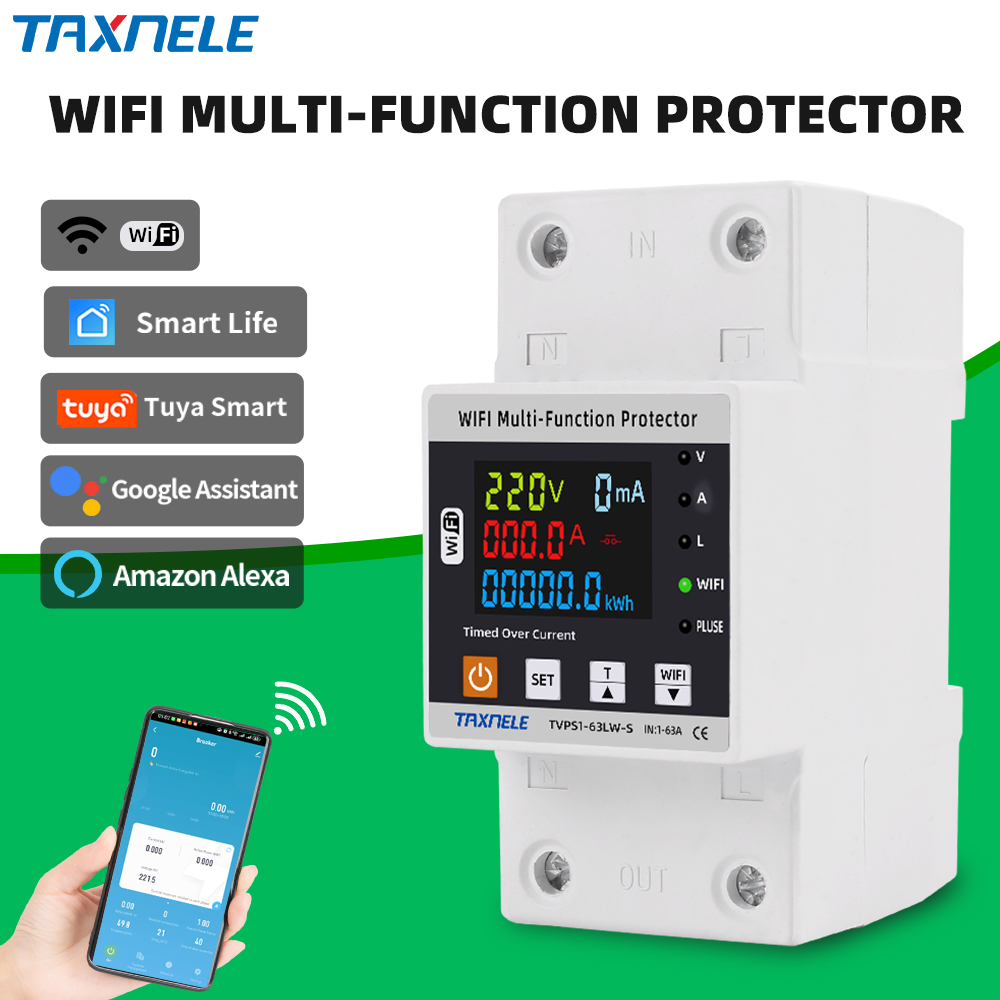
Traditional passive circuit breakers are being augmented by smart breakers equipped with embedded microcontrollers, current transformers, and wireless connectivity (Tuya WiFi, Zigbee, Modbus RS485). These advanced breakers enable solar asset operators to monitor real-time energy production (kWh), track voltage fluctuations, receive instant trip notifications, and remotely cycle system power via mobile applications or central SCADA platforms.
Trend 3: Bidirectional Arc Protection for Battery Energy Storage Systems (BESS)
With the global surge in paired Solar + Storage installations, DC protection devices must handle bidirectional current flow—charging from PV/grid to battery, and discharging from battery to inverter. Legacy polarized DC breakers, which rely on a specific current direction for magnetic arc extinction, pose extreme safety risks if reverse-wired or exposed to reverse fault currents. Modern B2B buyers must prioritize non-polarized DC MCBs engineered with symmetrical magnetic arc blowout chambers.
Trend 4: Regulatory Standardization & RoHS/REACH Environmental Compliance
Import compliance standards across North America (UL 489B for PV Protection), Europe (IEC/EN 60947-2), and Asia-Pacific are enforcing strict requirements regarding flame-retardant thermoplastics (V0 rating according to UL 94) and toxic element restrictions. Sourcing products manufactured with Silver-Tin-Oxide ($AgSnO_2$) electrical contacts rather than toxic Silver-Cadmium-Oxide ($AgCdO$) ensures long-term regulatory compliance across environmentally conscious export destinations.
Enterprise Advantage: Yueqing Favreau Electric Co., Ltd.
Located in the heart of China’s electrical manufacturing hub—Sulu Industrial Zone, Yueqing, Wenzhou—Yueqing Favreau Electric Co., Ltd. stands as an authoritative manufacturer and exporter of low-voltage electrical protection products. With extensive research capabilities, automated production machinery, and strict quality control protocols, we supply leading importers, panel builders, and solar brand distributors worldwide.
SGS-Assessed & ISO 9001 Managed
Our manufacturing premises and quality management systems are independently audited and verified on-site by SGS Group.
Custom OEM & ODM Capabilities
From private label front-panel artwork to specialized trip curve adjustments and custom packing boxes, we offer full-spectrum custom engineering.
Low MOQ & Flexible Logistics
Support for low minimum order quantities (MOQs starting from 10 pieces per model) allows seamless trial shipments and agile inventory management.