CE Certified Protection & Metering Lineup
Engineered for global wholesalers, panel builders, and electrical contractors. High breaking capacity, precision tripping mechanisms, and compliant with IEC/EN standards.
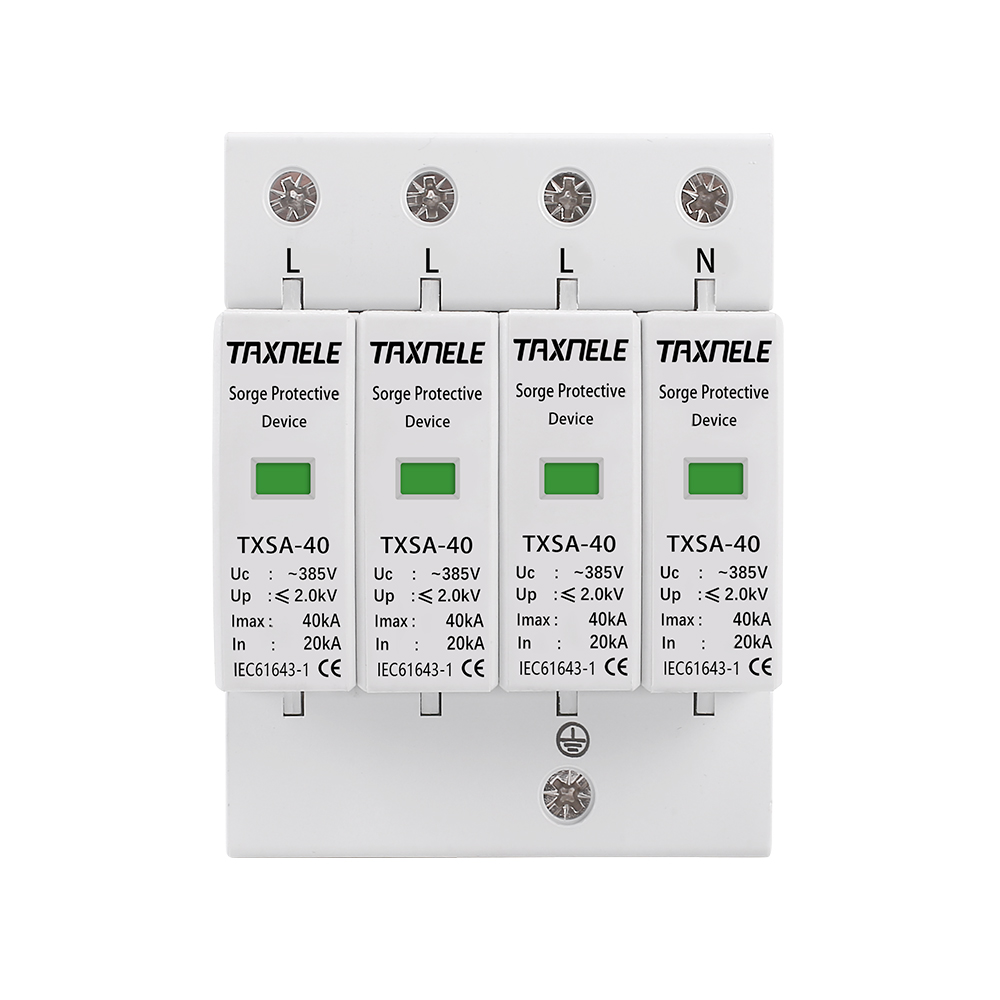
AC SPD 4P 275V 385V 420V 20KA 40KA 60KA Mini House Lightning Surge Protector Low-voltage Arrester Device
- 4 Pole Din-Rail Module
- 20kA - 60kA Imax Capacity
- Uc 275V / 385V / 420V Options
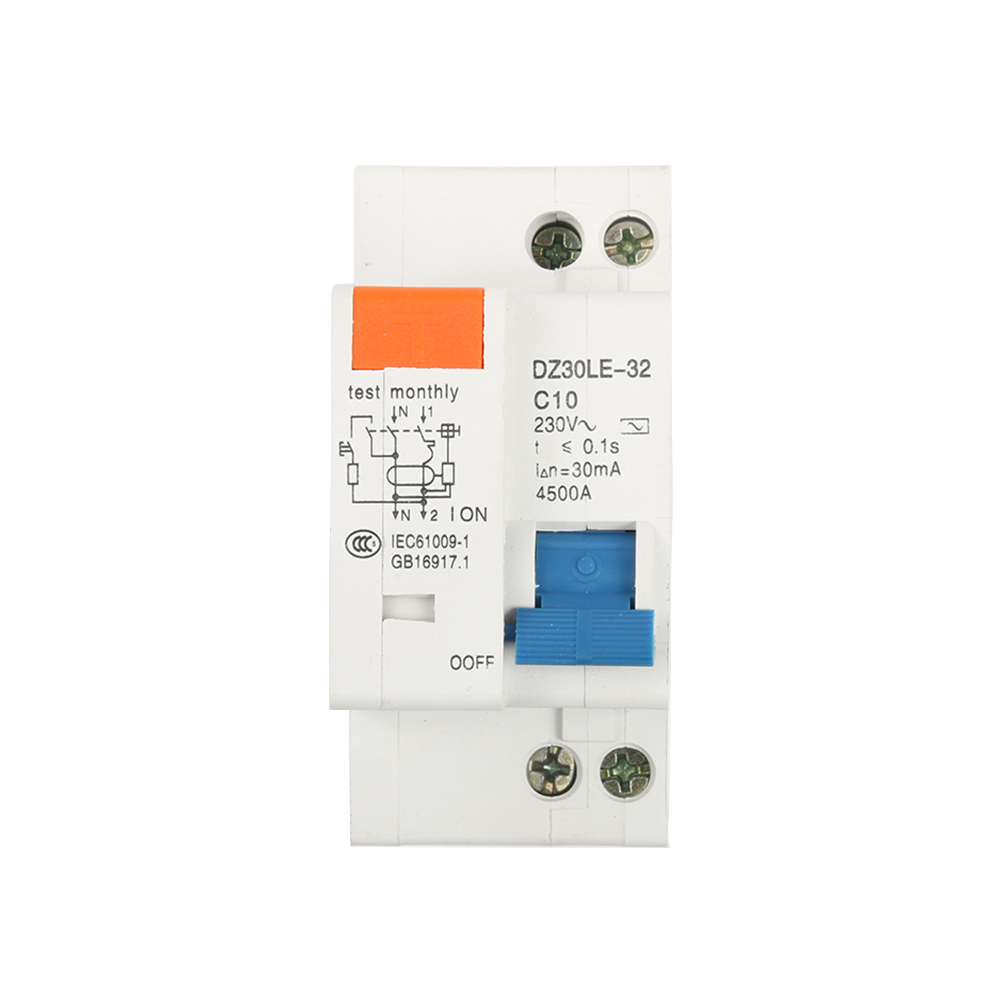
DZ30LE-32 1P+N 230V 220V 50HZ/60HZ Residual Current Circuit Breaker With Over Current and Leakage Protection RCBO
- Combined Overcurrent & Residual Protection
- Compact 1P+N Phase & Neutral Switching
- Instantaneous Earth Fault Response
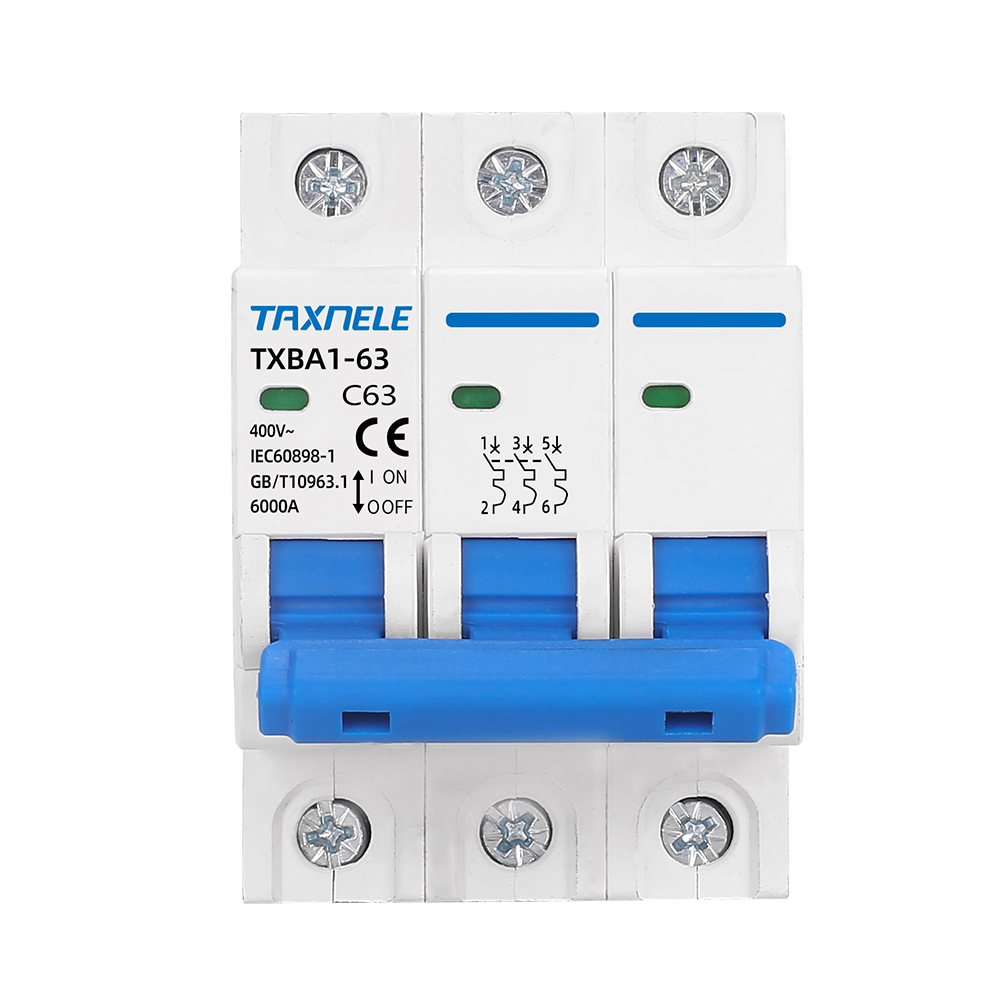
AC MCB 3P 230V 400V 6KA Mini Circuit Breaker Air Switch 6A 10A 16A 20A 32A 40A 50A 63A Overload Short Circuit Protector
- 3-Pole 400V Industrial Rating
- 6kA Short Circuit Breaking Capacity
- Full Current Span (6A to 63A)
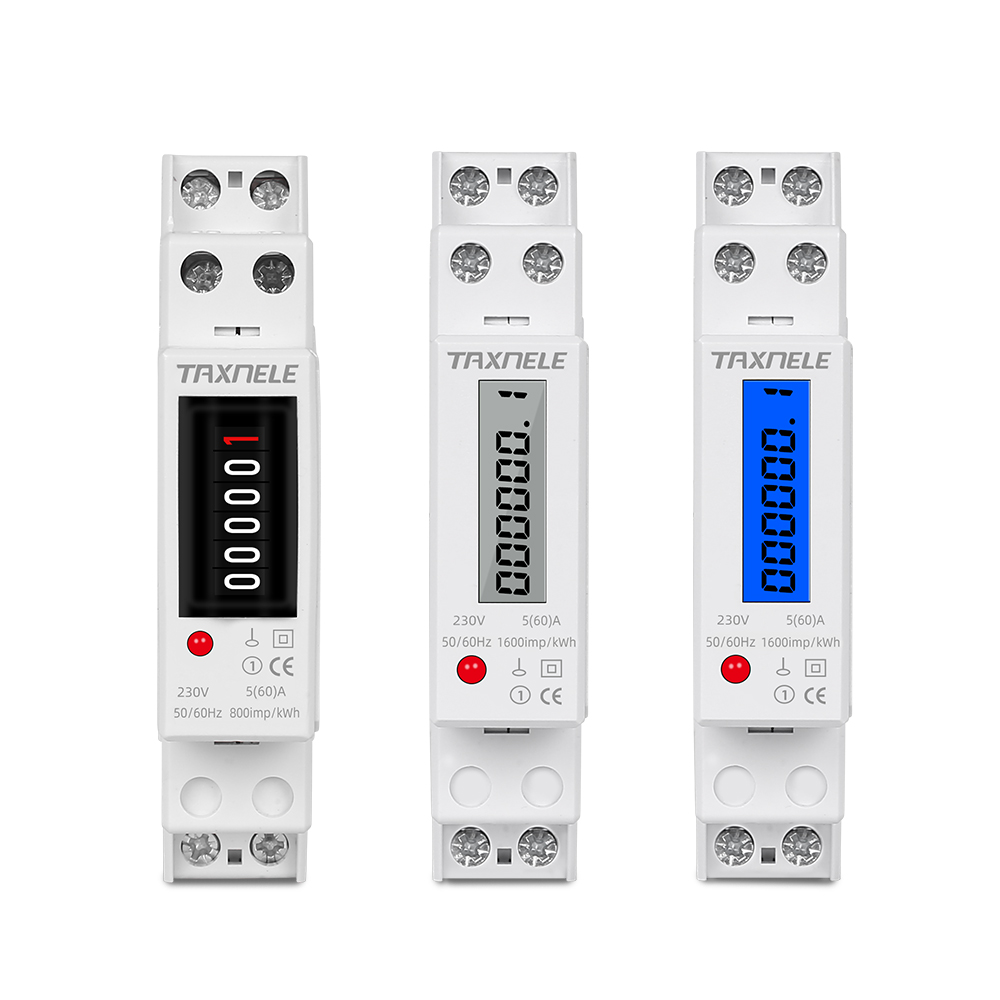
1P Single Phase Digital Wattmeter Power Consumption Analog Energy Meter kWh AC 230V 50Hz 60Hz 60A Rail Type Watt-hour Meter LCD
- Digital LCD Clear Backlit Screen
- Standard 35mm Din-Rail Mount
- High-Precision Submetering Class 1.0
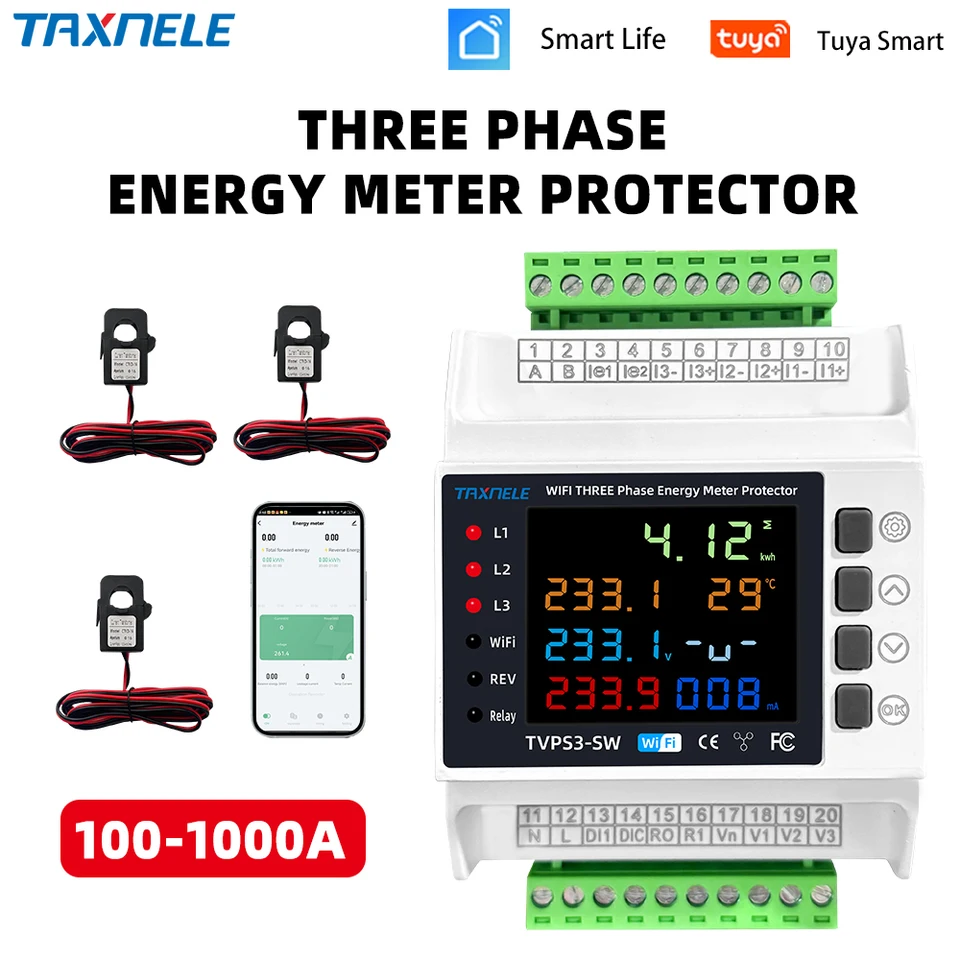
Three Phase Tuya Smart Life WiFi Bi-Directional Energy Meter 3 CT Clamps Leakage Voltage Protector Overvoltage Protection Relay
- Tuya Smart Life App Telemetry
- Integrated CT Clamps & Earth Leakage Relay
- Bi-Directional Solar Export Telemetry
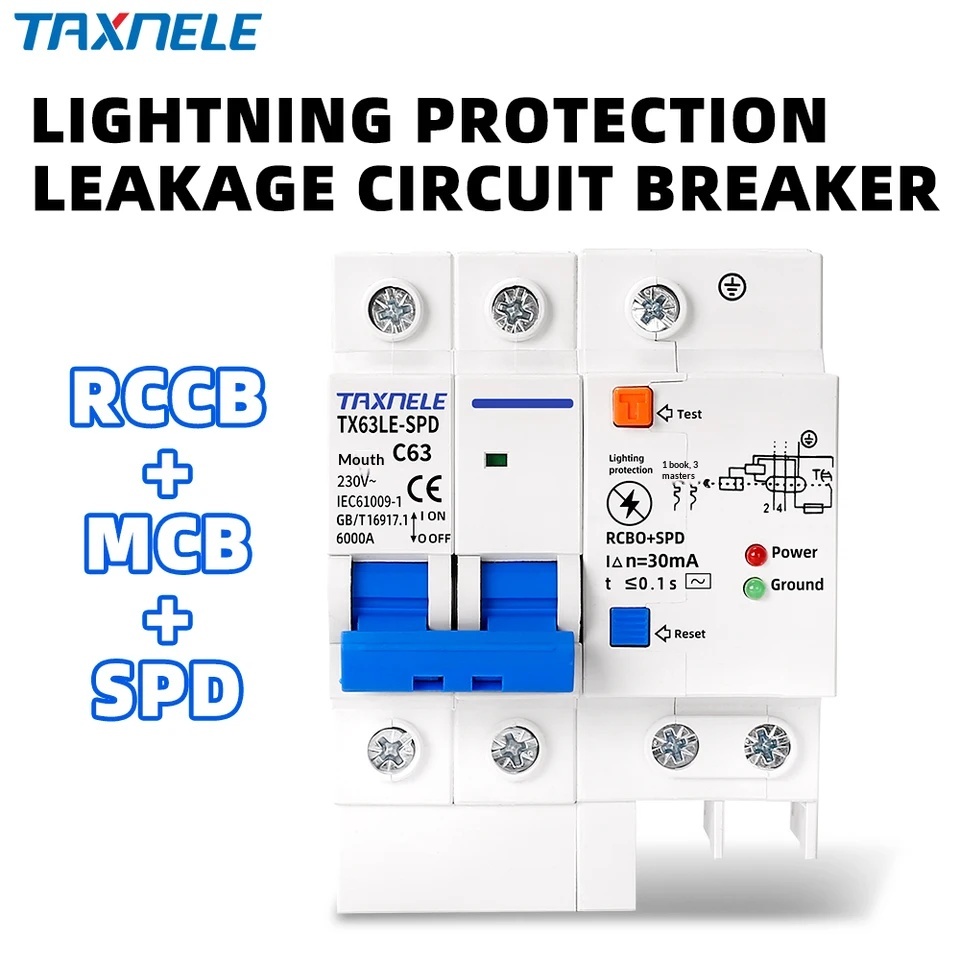
TAXNELE Residual Current Circuit Breaker 220V RCBO with SPD Lightning Protection Earth Leakage 10A-63A Mainland China
- Dual-Function Lightning & Earth Leakage
- 10A to 63A Wide Current Setting
- Severe Weather Electrical Defense
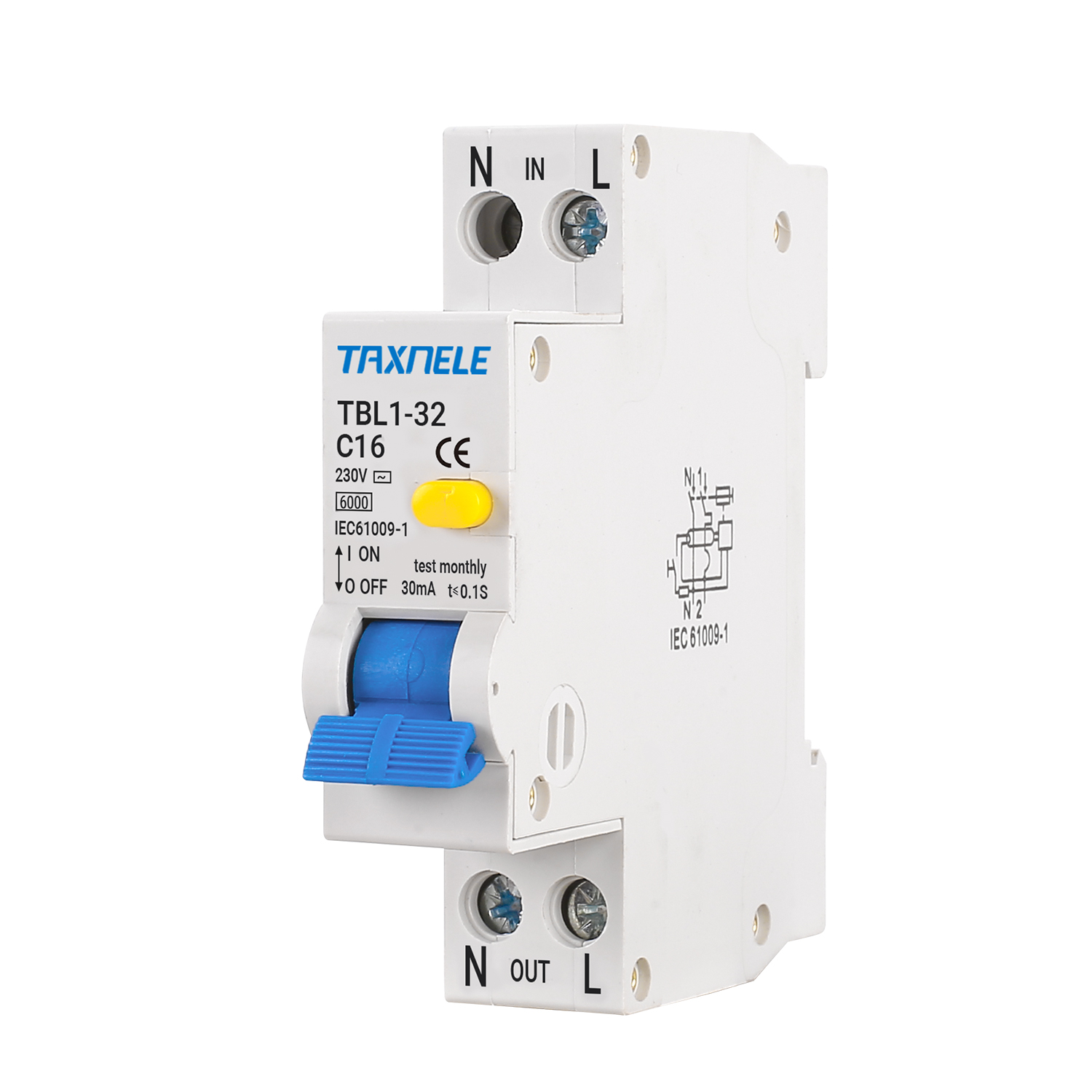
RCBO 1P+N 6KA Residual Current Differential Automatic Circuit Breaker Over Current Leakage protection 18MM 230V 50/60Hz
- Ultra-Compact 18mm Single-Module Width
- 6kA Short Circuit Interruption
- Precision Differential Current Detection
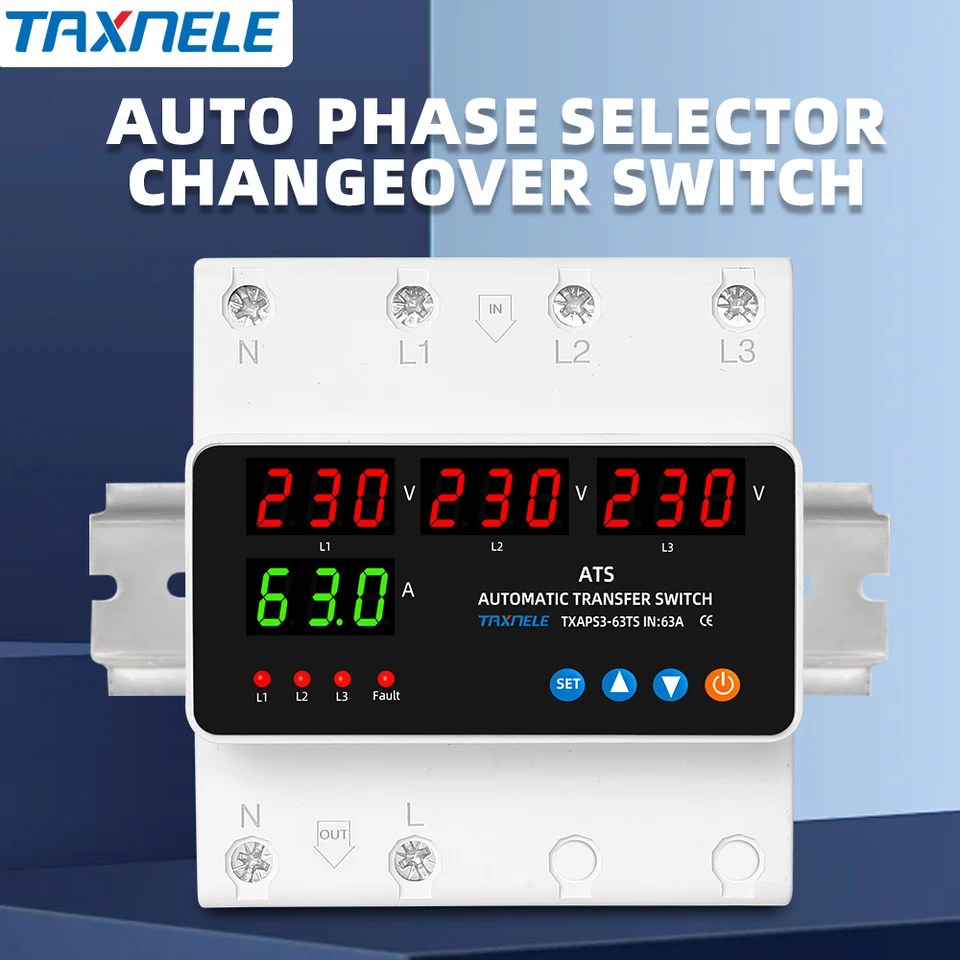
63A 100A 3 Phase 3P+N Mini Selector Adjustable Over Voltage Current Protector ATS Automatic Transfer Switch Monitor Relay
- Dual Power Grid/Generator Transfer
- Integrated Over/Under Voltage Monitoring
- 63A to 100A High Power Control
Technical Whitepaper: Engineering Fundamentals of Earth Leakage Protection
Earth leakage protection devices, commonly designated as Residual Current Devices (RCD), Residual Current Circuit Breakers (RCCB), and Residual Current Circuit Breakers with Overcurrent Protection (RCBO), constitute the fundamental safety cornerstone of modern low-voltage electrical distribution networks. Operating under the rigorous guidelines of international standards such as IEC/EN 61008-1 (for RCCBs) and IEC/EN 61009-1 (for RCBOs), these components are specifically designed to mitigate the hazards of electrical shock caused by direct or indirect human contact, as well as to prevent electrically induced building fires resulting from persistent earth fault currents.
Core Technical Insight: Zero-Sequence Current Transformer (ZSCT) Architecture. The fundamental operating principle of an Earth Leakage Circuit Breaker relies on vector summation of line currents. Under normal conditions, the vector sum of currents in all live conductors (phase conductors and neutral) equals zero ($\sum I = 0$). When an insulation breakdown occurs, current escapes to ground, disrupting vector equilibrium ($\sum I = I_{\Delta n}$). The ZSCT senses this imbalance flux, generating an induced signal in the secondary winding that trips the mechanical latch within 30 milliseconds.
Differentiating RCD Waveform Operating Types: Type AC vs. Type A vs. Type B
As modern power grids host an increasing density of non-linear electronic loads—such as variable speed drives, solar PV inverters, LED drivers, and Electric Vehicle (EV) chargers—standard protection devices face unprecedented residual current waveforms. Wholesalers and system designers must specify the exact protection type based on load characteristics:
| RCD Waveform Type | Detectable Residual Currents | Primary Industrial & Residential Applications | IEC Standard Reference |
|---|---|---|---|
| Type AC | Pure Sinusoidal Alternating Current (AC) residual currents only. | Legacy resistive heating, incandescent lighting, basic AC motors. | IEC 61008-1 / IEC 61009-1 |
| Type A | Sinusoidal AC + Pulsating Direct Current (DC) residual currents. | Single-phase inverters, washing machines, computers, switching power supplies. | IEC/EN 60755 Clause 4.2.2 |
| Type F | Type A requirements + High-frequency composite residual currents (up to 1kHz). | Single-phase variable speed heat pumps, air conditioners, frequency converters. | IEC 62423 Compliance |
| Type B | Type F + Smooth Pure DC residual currents + High frequency up to 2kHz. | EV Charging Stations (IEC 62752), Commercial Solar Inverters, 3-Phase UPS systems. | IEC 62423 / IEC 60755 |
Future Procurement Trends & Industry Evolution (2025–2030)
The global electrical market is transitioning rapidly toward decentralized power generation, smart grid telemetry, and intense spatial optimization inside distribution enclosures. Procurement managers and OEM buyers must align their supply chains with four major technological trends shaping residual current protection:
1. Smart IoT & Remote Telemetry Integration
Traditional passive circuit breakers are being superseded by smart IoT-enabled RCBOs featuring wireless Tuya WiFi, Zigbee, or RS485 Modbus connectivity. Modern installations require real-time telemetry of leakage currents (mA), line voltage, active power (kW), and thermal parameters with automated remote reset capabilities.
2. Mandatory 6mA DC Leakage Detection for EV Chargers
With global EV infrastructure expanding, IEC 62752 mandates smooth DC residual current monitoring at $\ge 6\text{mA}$. When a vehicle onboard charger leaks smooth DC into the AC network, it can saturate traditional Type A ZSCT cores. Wholesalers must stock Type B or Type A RCDs equipped with RDC-DD (Residual Direct Current Detecting Device) modules.
3. Compact 18mm Single-Module Width RCBO Evolution
Space optimization in consumer units has accelerated demand for 18mm 1P+N RCBOs. Historically requiring 36mm (2 DIN modules), advanced micro-mechanisms and integrated circuit designs allow full overload, short-circuit (6kA/10kA), and earth leakage protection within a single 18mm enclosure width.
4. Hybrid Protection: Integrated SPD + Earth Leakage
Extreme weather events and volatile grid switching surges are driving the adoption of hybrid protective devices. Integrating surge protective devices (Type 2 SPD) directly with differential circuit breakers saves installation labor, reduces cabling resistance, and prevents transient overvoltages from damaging sensitive residential micro-controllers.
B2B Procurement & Engineering FAQ
Technical guidance formulated by our Chief Quality Officer and Application Engineers to assist importers, distributors, and EPC contractors during product qualification.
- $I_{\Delta n} = 10\text{mA} \text{ or } 30\text{mA}$ (Personal Protection): Mandatory for socket outlets, bathrooms, outdoor equipment, and residential final circuits under IEC 60364 to prevent fatal electric shock.
- $I_{\Delta n} = 100\text{mA} \text{ or } 300\text{mA}$ (Property & Fire Protection): Applied to main distribution boards or industrial feeders to prevent persistent arcing faults that can ignite surrounding structural materials.
- $I_{\Delta n} = 500\text{mA}$ (Selective Time Delay): Used as an upstream main breaker to provide discrimination with downstream 30mA units.
- Branding & Aesthetics: Custom laser-printed brand logos, custom front cover artwork, color-coded handles, and custom packaging boxes.
- Electrical Calibration: Customization of nominal current ($I_n = 6\text{A}$ to $100\text{A}$), tripping sensitivity ($10\text{mA}, 30\text{mA}, 100\text{mA}, 300\text{mA}$), and custom over/under-voltage trip thresholds for unstable regional electrical grids.
- Documentation: Private-labeled user manuals, technical datasheets, and test reports.
Partner with a Certified Earth Leakage Device Manufacturer
Expand your product catalog with high-reliability, CE certified RCCBs, RCBOs, SPDs, and Smart IoT Energy Meters. Contact our engineering team today for factory-direct price lists, datasheets, and sample evaluation.