Choosing an Automatic Transfer Switch is not just a matter of comparing prices or enclosure sizes. In a hospital plant room, a data center, or a factory control cabinet, the switch must detect a supply failure and transfer the load with minimal interruption. It must also return to normal power in a controlled way. Small details matter: rated current, pole configuration, transfer time, bypass options, and maintenance access.
For this guide, power-systems engineer Dr. Lin Wei offers a practical reminder: “An ATS earns trust through tested transfers, clear ratings, and dependable support—not its brochure alone.” This is an editorial quotation, not a sourced interview statement. Buyers should verify every claim against product documentation and test records.
China’s market includes established electrical brands and specialist manufacturers. Their products can differ in component quality, customization, certification evidence, and after-sales service. A polished catalog is not enough. Ask how the unit performs under the intended load, what inspection records are available, and whether replacement parts can be obtained promptly. These checks are useful, though they cannot replace an application-specific engineering review.
The Top 10 Automatic Transfer Switch Manufacturers in China list is intended as a starting point, not a universal ranking. Project requirements vary. A compact building installation may need a different solution from a mission-critical facility. Compare manufacturers on verifiable specifications, production experience, quality controls, and technical support. Then confirm that the proposed switch suits the actual system—not merely the sample shown in a sales meeting.
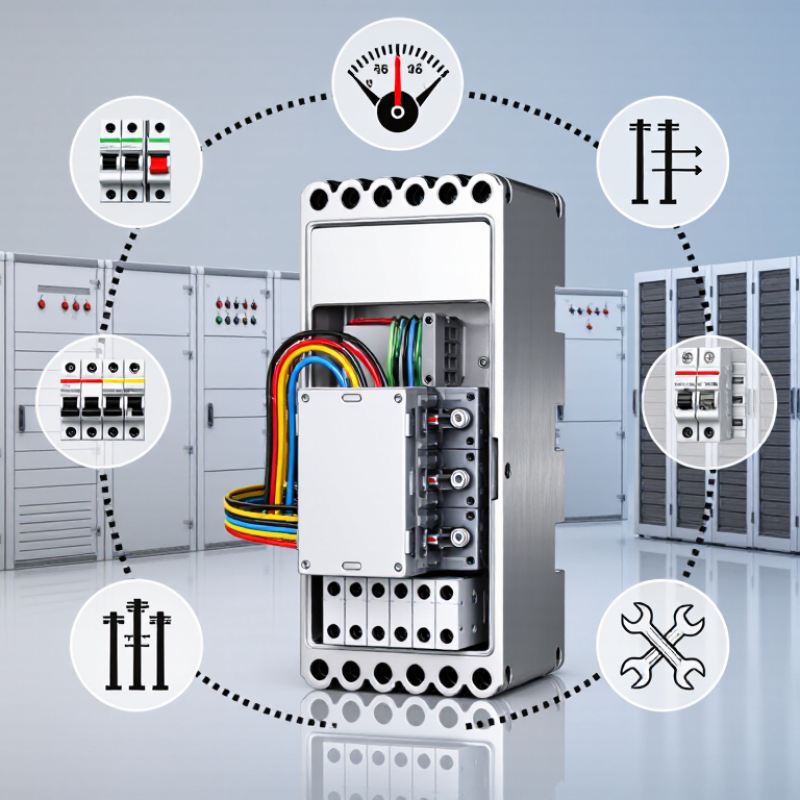
An automatic transfer switch (ATS) moves an electrical load between two power sources, commonly utility power and a standby generator. It does not create electricity. It monitors the incoming supply and controls which source feeds a connected panel or piece of equipment.
During normal operation, the ATS connects the load to the preferred source. If voltage or frequency falls outside configured limits, the switch can signal a generator to start. After the backup source stabilizes, the ATS transfers the load. Depending on its design, it may briefly disconnect both sources before connecting the new one. That pause can reset sensitive equipment.
When utility power returns and remains stable for a set period, the switch transfers the load back and may allow the generator to cool down before stopping. Timing matters. A setting that works for a pump room may not suit a server closet, so commissioning should reflect the actual load and generator behavior.
The enclosure, current rating, switching method, and control features all affect suitability. Keep this in mind. An ATS is not a substitute for correct protection, grounding, or maintenance. Even a well-specified unit can behave poorly if sensors are misconfigured or contacts are worn. Regular inspection and a supervised transfer test help reveal problems before an outage does.
Automatic transfer switches come in several forms, and the right choice depends on the load and power sources. Open-transition models disconnect one source before connecting another. They suit many buildings where a brief interruption is acceptable. Closed-transition switches overlap sources briefly, but only where the utility arrangement allows it. Delayed-transition models add a pause between sources, which can help loads that need residual voltage to decay. Small detail, real impact.
Switch construction matters too. Contactor-based units are common for frequent transfers and moderate loads. Molded-case and power-frame designs can serve larger systems with higher current ratings. Some installations use bypass-isolation switches, allowing maintenance while the load remains powered. A hospital operating room, a factory motor line, and a backup generator for a small office do not share the same transfer needs. Motor starting current can also change the required switch rating.
Before selection, check voltage, phase, pole count, fault-current rating, and whether the generator can accept the load quickly. Specify the preferred transfer behavior and verify controls work with both sources. Commissioning should include simulated source failure and restoration, not just a visual inspection. In practice, settings are sometimes copied from an older installation. That deserves a second look. Actual load tests and clear maintenance records provide better evidence of reliable operation.
Choosing an automatic transfer switch manufacturer takes more than comparing prices. Start with the actual load, rated current, voltage, number of poles, and transfer time your installation requires. Ask how the switch responds to a power failure and whether its controller supports the monitoring signals you use. Details matter. A unit that looks suitable on paper may not fit your panel or operating conditions.
Review engineering evidence, not just catalog claims. Request relevant test reports and check that model numbers match the products being quoted. Inspect the enclosure, terminals, wiring diagrams, and operating mechanism for practical details that affect installation and maintenance. Ask technicians how they test switching performance and what records they retain. Small gaps in documentation can slow a project later.
Evaluate production consistency and service capability, too. A factory visit, when practical, can reveal how components are assembled and inspected. Ask about spare-part availability, response times, and support for commissioning. Request a sample or reference installation with a similar load, then verify the details independently. No supplier is perfect; even a clear answer about limitations is more useful than a polished promise.
Top 10 Automatic Transfer Switch Manufacturers in China
Comparing the Top 10 Automatic Transfer Switch Manufacturers in China takes more than scanning product catalogs. Check whether each manufacturer builds the switching mechanism, control unit, or complete assembly. These differences affect testing, maintenance, and responsibility when problems arise. Details matter.
For a fair comparison, match rated current, number of poles, transition type, and operating voltage to your installation. Ask for test reports, wiring diagrams, and clear information about short-circuit coordination. A factory visit or live product demonstration can reveal practical details, such as terminal access and controller readability. A ranking alone cannot confirm long-term reliability; I would treat it as a starting point, not proof.
Tips: Share your load profile and generator details before requesting a quotation. Confirm local service coverage, spare-part availability, and commissioning support in writing. Ask how the unit behaves during voltage dips or a failed generator start. One detail is easy to miss: installation space. Measure the cabinet and cable entry points before choosing a model. Even a careful shortlist may need revising once site conditions are checked.
Top 10 Automatic Transfer Switch Manufacturers in China?
How to Choose a Chinese Automatic Transfer Switch Supplier
Choosing a supplier takes more than comparing prices. Check the switch’s rated current, pole count, transfer time, and compatibility with your generator or distribution panel. Ask for test records covering mechanical operation, electrical endurance, and performance under the stated load. A catalog is not proof. For low-voltage transfer equipment, review documentation against IEC 60947-6-1 and confirm the exact model tested matches the product offered.
Factory checks matter. Ask how the supplier controls contact assembly, wiring, and final inspection, then request serial-number traceability and a sample test report. Uptime Institute’s 2024 Global Data Center Survey reported that 54% of surveyed operators had experienced an outage in the previous three years. Power-related failures make careful transfer testing especially relevant for critical facilities. Still, a laboratory certificate cannot replace an on-site assessment; I would verify production and testing practices before placing a large order.
Tips: Request a witnessed changeover test using your specified voltage and load conditions. Confirm switching logic, interlocks, and manual operation, too. Compare delivery schedules, spare-part availability, and warranty terms in writing. If answers are vague, pause. A low quote can hide costly gaps.
A practical, brand-neutral checklist for comparing automatic transfer switch (ATS) suppliers. The points below are evaluation criteria, not a ranked manufacturer list.
| No. | Evaluation Dimension | What to Check | Useful Evidence or Buyer Questions |
|---|---|---|---|
| 1 | Applicable standards | Confirm that the proposed transfer switching equipment is designed and tested against the standards and regulations required for the destination market. | Ask for the exact standard edition, test reports, certificate scope, issuing body, and model numbers covered. IEC 60947-6-1 covers low-voltage transfer switching equipment; confirm local requirements separately. |
| 2 | Rated operating voltage and frequency | Match the ATS to the system’s nominal voltage, frequency, earthing arrangement, and available source configuration. | Check the nameplate ratings and wiring diagrams against the project supply. Common systems vary by country and application; do not assume a product configured for one market suits another. |
| 3 | Rated current and short-circuit coordination | Verify that the rated current suits the load and that the assembly is coordinated with upstream protective devices and the available fault level. | Request technical data for the selected rating, short-circuit withstand or conditional short-circuit ratings where applicable, and the required upstream protective-device information. |
| 4 | Transfer equipment type | Determine whether the application requires a switch-disconnector-based solution, a circuit-breaker-based solution, or another suitable transfer switching arrangement. | Ask the supplier to identify the equipment class and explain its protection, isolation, and switching functions. Confirm that the proposed arrangement meets the project specification. |
| 5 | Transfer sequence | Choose the required transition method, such as open transition (break-before-make) or, where permitted and engineered for the system, closed transition. | Request a sequence-of-operation description, interlocking details, transfer and retransfer settings, and confirmation of whether paralleling sources can occur during operation. |
| 6 | Number of poles and neutral switching | Check the required pole configuration, including whether the neutral must be switched for the system’s earthing and generator arrangement. | Provide the single-line diagram and earthing details for review. Ask for the wiring diagram and written confirmation of the offered pole arrangement. |
| 7 | Controller and operating modes | Review source monitoring, automatic and manual operation, adjustable thresholds, indication, alarms, and control-power arrangements. | Request the controller manual and settings list. Confirm available control and communication interfaces against the project requirements rather than relying on feature names alone. |
| 8 | Environmental and enclosure suitability | Match the enclosure and installation conditions to indoor or outdoor use, ambient temperature, humidity, dust, water exposure, and altitude where relevant. | Ask for the enclosure rating and the conditions under which it applies. Confirm any derating, ventilation, corrosion protection, or installation limitations in the datasheet. |
| 9 | Quality control and traceability | Assess whether production checks and final testing are documented and traceable to the supplied unit. | Ask for sample routine-test records, serial-number traceability, inspection procedures, and the factory’s process for handling nonconformities. Verify documents for the actual model and order. |
| 10 | Documentation, support, and delivery | Evaluate the supplier’s ability to provide complete project documentation, spare parts, technical support, and a clearly defined delivery scope. | Confirm drawings, manuals, test documents, packaging requirements, warranty terms, spare-parts availability, response arrangements, lead time, and acceptance criteria in writing. |
Selection note: Ratings, certifications, and available configurations differ by model and market. Verify all claims against current documentation for the exact equipment offered, and have the final selection checked against the project design and applicable regulations.
It moves an electrical load between a preferred power source and a backup source. It does not generate electricity.
It detects voltage or frequency outside set limits and can signal a generator to start. Once the backup supply stabilizes, it transfers the load.
Not always. Some switches briefly disconnect both sources, which may reset sensitive equipment. Small pause, big effect.
Open-transition switches disconnect one source before connecting the next. Closed-transition switches briefly overlap sources where the utility arrangement permits it. Delayed-transition switches add a pause between sources.
Match the current rating, voltage, phase, pole count, and fault-current rating to the installation. Also consider motor starting current and available cabinet space.
The generator must accept the load and reach stable output before transfer. Share its details and the load profile when planning the system.
Test simulated power failure and restoration, and confirm the controls work with both sources. A visual check alone is not enough.
Inspect it regularly, check for worn contacts and sensor settings, and keep maintenance records. A supervised transfer test can reveal issues, though it cannot promise trouble-free operation.
An Automatic Transfer Switch (ATS) monitors the power supply and switches a connected load from its primary source to a backup source when an interruption or abnormal condition occurs. This article explains how the switching process works, introduces common ATS types, and outlines their uses in settings such as buildings, data facilities, and industrial operations. Understanding the differences in switching methods, capacity, and control features helps buyers identify equipment suited to their power system.
The guide also discusses how to assess manufacturers in China and compare the top 10 according to practical factors such as product range, technical capabilities, quality controls, customization, and after-sales support. When choosing a supplier, buyers should clarify operating requirements, verify relevant documentation and testing information, compare service arrangements, and consider long-term reliability—not price alone. These steps can help narrow the options and support a more informed purchasing decision.