CE & RoHS Tested · SGS-Assessed Supplier · OEM/ODM from 10 pcs info@favreauelectric.com
0%

Choosing an Automatic Changeover Switch is about more than comparing prices or reading a product catalogue. In a factory control room, a transfer delay can interrupt a production line. In a commercial building, an undersized switch may struggle with the connected load. These practical details shape whether a product suits the job.

China has a broad supplier base, from established electrical manufacturers to specialized assembly companies. This guide introduces manufacturers to consider and explains how to compare them. It looks at rated current, voltage, number of poles, transfer time, operating mechanism, and product testing. It also considers factory capabilities, technical documentation, customization, and after-sales support. A polished brochure is useful, but it cannot replace clear specifications and a responsive engineering team.

Details matter. Buyers should match the switch to the power system, installation environment, and backup source, then confirm the requirements for their destination market. Ask for relevant test reports and verify that model numbers match the documents. This step is easy to overlook. Manufacturer claims can vary, and a supplier that fits one project may not suit another. The list should therefore be treated as a starting point, not a universal ranking. With careful checks, readers can build a more reliable shortlist and ask better questions before placing an order.
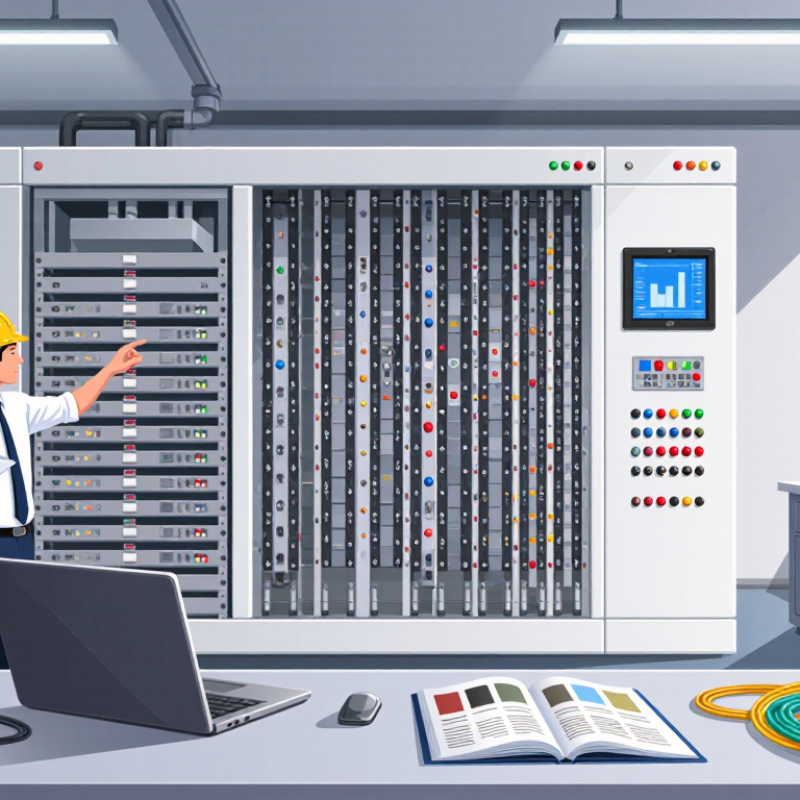
Top Automatic Changeover Switch Manufacturers in China?

What Automatic Changeover Switches Do and Where They Are Used

An automatic changeover switch (ATS) monitors the normal power supply and detects an outage or unacceptable voltage change. It then disconnects the affected source and connects a standby source, often a generator. Not a generator. The switch manages the transfer; it does not create electricity. Transfer time and sequence depend on the equipment and system design.

The U.S. Energy Information Administration reported an average of 5.5 hours of electricity interruptions per U.S. customer in 2022, including major events, in its Electric Power Annual. That national figure cannot predict a particular site’s risk, but it shows why backup arrangements matter.

ATS equipment is used in hospitals, data centers, factories, telecom facilities, water plants, and commercial buildings. Picture a hospital’s emergency lighting or a factory’s control panels: even a short interruption can disrupt operations.

Selection should consider load current, available fault current, number of poles, transfer type, and coordination with the generator.

Details matter.

An overlooked maintenance issue is failure to test the transfer sequence under realistic conditions. A switch may look ready, yet connected loads can behave differently during an actual changeover.

Regular inspection and documented testing help reveal those gaps.

How China’s Automatic Changeover Switch Industry Is Structured

China’s automatic changeover switch industry is not one uniform factory sector. It includes component suppliers, switch assemblers, control-system integrators, and export-oriented producers. Upstream firms supply molded cases, contacts, coils, motors, and electronic controllers. Assembly plants combine these parts into units for homes, commercial buildings, or industrial panels. Some companies focus on standard products, while others adjust ratings, pole counts, or enclosures for project orders. The boundaries can blur; an assembler may still rely on outside suppliers for critical components.

Manufacturers also differ in production scale and technical depth. Larger operations may run automated assembly lines and conduct temperature-rise, endurance, and transfer tests. Smaller workshops may offer flexible customization, but buyers should ask how consistency is controlled between batches. Product documentation matters: check rated current, short-circuit withstand capability, transfer time, wiring diagrams, and test records. A polished catalogue is not proof of field reliability. This detail is easy to overlook.

Tips: Request a sample and its test report. Confirm whether the unit uses open or closed transition, and match its ratings to the actual load. Ask who handles commissioning and replacement parts.

Leading Automatic Changeover Switch Manufacturers in China

China’s leading automatic changeover switch manufacturers serve commercial buildings, factories, data rooms, and infrastructure projects. Their products transfer loads between a normal power source and a standby supply when voltage fails or moves outside set limits. Capabilities differ, so buyers should compare engineering support, production controls, and product documentation—not just catalog range.

Start with the application. Check rated current, pole configuration, transfer time, and short-circuit withstand ratings against the installation requirements. Ask how mechanical and electrical interlocks prevent both sources from connecting at once. Request test records for switching endurance and operating conditions. Details matter. A polished brochure can still leave practical questions unanswered.

Reliable suppliers explain installation limits and provide clear wiring diagrams, inspection guidance, and spare-parts information. For critical loads, ask whether the switch supports manual operation and how it behaves during control-power loss. Factory visits or independent inspections can help confirm assembly practices, but they do not replace reviewing test evidence. Not every manufacturer will be a fit. The right choice depends on the load, local service access, and how much downtime the site can tolerate. That takes time.

Key Products, Technologies, and Applications

China’s automatic changeover switch manufacturers offer dual-power transfer units, generator-to-utility switches, and bypass-isolation models. Typical technologies include voltage, frequency, and phase monitoring, plus motorized switching mechanisms and configurable controllers. Options vary by model. Some controllers also provide remote status signals for building-management systems.

The IEA’s Electricity 2024 report projected global electricity demand would grow by an average of 3.4% annually through 2026. That growth makes reliable transfer equipment increasingly relevant to data centers, hospitals, factories, and commercial buildings. In a server room, even a brief interruption can disrupt operations. For product comparisons, check rated current, transfer time, pole configuration, and performance under the site’s actual load. IEC 60947-6-1 is a useful reference for transfer-switch equipment. One detail is often overlooked: a fast transfer is not automatically suitable for every load.

Tips: Match the switch to the generator and load, not just the panel rating. Ask for test records, wiring diagrams, and clear maintenance intervals. Verify communication features and environmental ratings; marketing descriptions alone can leave gaps. A careful site review may reveal needs that a catalog does not.

Top Automatic Changeover Switch Manufacturers in China? — Key Products, Technologies, and Applications

Brand-neutral overview of common automatic transfer switch (ATS) product segments, technologies, and applications.

Product Segment Typical Configuration and Rating Key Technology Common Applications Relevant Standards and Selection Checks
Compact, motor-operated ATS Commonly used in low-voltage systems; product ranges often cover tens to several hundred amperes. Available in two-source configurations. Motor-driven changeover mechanism; controller monitors source voltage and frequency and initiates transfer when configured limits are exceeded. Small commercial buildings, control panels, telecom equipment, and backup-generator circuits. Check rated operational voltage and current, number of poles, transfer time, mechanical endurance, and suitability for the installation’s fault level.
Power-frame ATS Designed for higher-current low-voltage distribution, with ratings that can extend to several thousand amperes depending on the product range. Interlocked switching devices with an automatic controller; may support adjustable source sensing, alarms, and remote status signals. Data centers, hospitals, industrial plants, and large commercial buildings. Verify short-circuit withstand and making capacity, coordination with upstream protection, neutral switching requirements, and maintenance provisions.
Contactor-based ATS Typically selected for low-voltage loads where fast operation and frequent switching are required; available across a broad range of current ratings. Electrically and mechanically interlocked contactors; commonly configured for open-transition (break-before-make) transfer. Generator-backed building services, pumps, HVAC systems, and other standby-power loads. Confirm utilization category, load type, short-circuit protection arrangement, switching sequence, and compatibility with the generator controller.
Circuit-breaker-based ATS Uses circuit breakers as the switching devices; ratings and protective features depend on the selected breakers and assembly. Interlocked breakers can provide a switching function alongside overcurrent protection, subject to the equipment design and certification. Distribution boards and facilities requiring integrated protection or isolation functions. Check breaker trip settings, interrupting capacity, coordination study, interlocking, and whether the complete transfer assembly is tested for its intended duty.
Closed-transition ATS Available in selected low-voltage configurations; application suitability depends on the utility supply, generator, and control scheme. Temporarily parallels sources during transfer to reduce interruption; requires synchronism checks and controlled overlap. Critical processes where a brief interruption is undesirable and the power-system design permits momentary paralleling. Requires careful review of utility interconnection rules, synchronizing controls, protection settings, and approved operating procedures.
Bypass-isolation ATS Typically specified for critical-power installations; a separate bypass path allows the ATS to be isolated for inspection or maintenance. Transfer and bypass functions are arranged to maintain supply continuity during certain maintenance operations, according to the design. Hospitals, data centers, airports, and other sites with high continuity requirements. Review bypass interlocking, isolation method, maintenance procedure, source availability, and the tested configuration of the complete assembly.

Standards and data note: IEC 60947-6-1 covers low-voltage transfer switching equipment; GB/T 14048.11 is the corresponding Chinese national standard for transfer switching equipment. Ratings and features vary by product and configuration. Confirm the applicable standard edition, certification, and manufacturer datasheet before specification or purchase.

How to Evaluate and Select a Chinese Manufacturer

Choosing a Chinese automatic changeover switch manufacturer starts with the application, not the catalogue. Confirm rated voltage and current, pole configuration, transition type, and short-circuit withstand capability. Ask how the switch performs under the actual load, including transfer time and recovery after a failed supply. Details matter.

The IEA’s Electricity 2024 report projected global electricity demand growth of about 3.4% annually from 2024 to 2026. That makes reliable transfer equipment increasingly relevant, but demand forecasts do not prove a supplier’s quality. Request model-specific test reports, and check that they cover the configuration you intend to buy. IEC 60947-6-1 provides a technical reference for transfer switching equipment. Useful evidence includes temperature-rise, mechanical endurance, and operational test results.

Look beyond certificates. Visit the production line, or arrange an independent audit, and check calibration records, component traceability, and final inspection procedures. Ask to see how the factory handles failed tests and corrective actions. A polished factory tour is reassuring, but it cannot establish consistent batch quality. I would also compare sample units with the approved drawings; this step is easy to overlook. Finally, confirm spare-parts availability, warranty terms, and response times in writing. Then assess whether the supplier can support commissioning and troubleshooting after delivery.

FAQS

What types of automatic changeover switches are commonly available?

Options include dual-power transfer units, generator-to-utility switches, and bypass-isolation models. Features vary by model.

Which technical details should buyers compare?

Check rated current, voltage, pole configuration, transition type, and transfer time. Also confirm short-circuit withstand capability.

Is the fastest transfer switch always the best choice?

No. A fast transfer may not suit every load. Check performance with the equipment actually installed.

What test records should a supplier provide?

Request model-specific reports covering the intended configuration. Temperature-rise, mechanical endurance, and operational test results are useful. Details matter.

How can buyers assess factory quality?

Review calibration records, component traceability, and final inspection procedures. An independent audit may reveal more than a polished tour.

Why compare sample units with approved drawings?

This can uncover differences before production or delivery. It is an easy step to miss, though.

What should buyers confirm about support after delivery?

Get spare-parts availability, warranty terms, and response times in writing. Ask whether commissioning and troubleshooting support are available.

Which standard can help evaluate transfer-switch equipment?

IEC 60947-6-1 is a useful technical reference. Still, a standard alone does not prove consistent batch quality.

Conclusion

An Automatic Changeover Switch transfers an electrical load between a primary power source and a backup source when the primary supply becomes unavailable or unreliable. These devices support continuity in settings such as commercial buildings, factories, data facilities, and infrastructure systems. China’s industry includes manufacturers serving a range of needs, from standard low-voltage equipment to more specialized solutions, with product capabilities shaped by application requirements and technical standards.

The article examines the structure of China’s market and the capabilities buyers may encounter, including switching mechanisms, monitoring and control features, operating modes, and installation options. It also outlines how to assess manufacturers by reviewing product specifications, quality assurance practices, certifications relevant to the intended market, production capacity, technical support, and after-sales service. Matching the switch’s ratings and functions to the power system, load characteristics, and operating environment helps buyers make a suitable and reliable selection.

Ethan

Ethan

Ethan is a marketing professional with a strong understanding of the products and services his company provides. He combines product knowledge with a clear, practical approach to communication, helping readers understand how different solutions work, what to consider when comparing options, and how......