Bidirectional Solar Energy Meter: Sourcing Architecture for Solar PV, BESS, and Smart Grid Networks
As global solar energy installations accelerate across commercial, industrial (C&I), and residential sectors, grid operators and system integrators face increasing complexity in managing dual power flows. A Bidirectional Solar Energy Meter serves as the fundamental sensing node in modern photovoltaic (PV) systems, battery energy storage systems (BESS), and distributed microgrids. Unlike legacy single-direction kWh meters that miscalculate or totalize exported power as grid consumption, a precision bidirectional solar energy meter measures active and reactive energy in both directions—separately logging energy imported from the utility grid and surplus solar power exported back to the grid.
Information Gain Insight: Sourcing high-precision bidirectional meters with dual RS485 Modbus registers allows solar EPCs to achieve two critical goals simultaneously: accurate net-metering revenue reconciliation and microsecond-level zero-export feedback loops to avoid utility penalty tariffs.
1. Direct vs. Indirect (CT-Operated) Bidirectional Measurement Logic
When selecting a Bidirectional Solar Energy Meter for B2B distribution or OEM integration, electrical engineering buyers must distinguish between direct connection models and Current Transformer (CT) operated units:
- Direct Connection Bidirectional Meters (up to 80A/100A): Designed for residential single-phase (230V) and three-phase (400V) solar distribution boards. These feature internal shunt resistors or integrated current sensors. They offer compact DIN-rail installation, reducing wiring complexity inside consumer units.
- Split-Core & Solid-Core CT Operated Bidirectional Meters (1A / 5A or 333mV secondary): Engineered for commercial PV arrays, hybrid energy storage retrofit projects, and high-amperage switchgear. By utilizing external split-core CTs, installers can retrofit bidirectional solar monitoring onto existing main cables without interrupting live site operations or breaking utility seals.
2. Zero-Export Power Control & Inverter Protocol Compatibility
Modern electrical grids in Europe, Australia, and South America increasingly enforce "Zero-Export" or limited grid-feed limits. A Bidirectional Solar Energy Meter positioned at the point of common coupling (PCC) continuously monitors the net active power vector. When local PV generation exceeds load consumption, the meter's RS485 Modbus-RTU port feeds real-time power data (sampled every 100 to 200 milliseconds) to the hybrid solar inverter or string controller. The inverter dynamically throttles its PWM output to ensure zero power crosses back into the utility grid.
Top Recommended Bidirectional Solar Energy Meters
CE and RoHS certified DIN-rail energy meters manufactured by Yueqing Favreau Electric Co., Ltd. for international distributors, OEM partners, and solar EPC contractors.
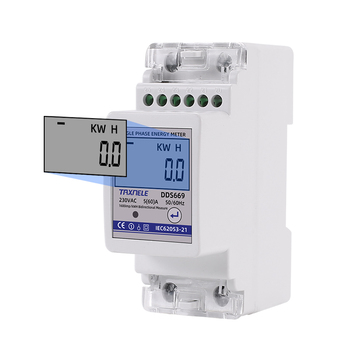 BIDIRECTIONAL

Single Phase DIN-Rail Bidirectional Solar Energy Meter (230V 60A/80A)
- Class 1.0 Accuracy
- Import / Export kWh
- RS485 Modbus-RTU
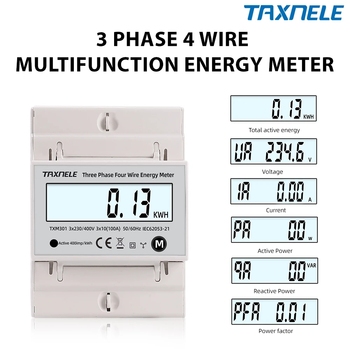 3-PHASE PV
Three-Phase 4-Wire Bidirectional Smart Energy Meter (380V/400V 100A)
- Multi-Tariff TOU
- V/A/kW/PF/Hz
- LCD Backlit
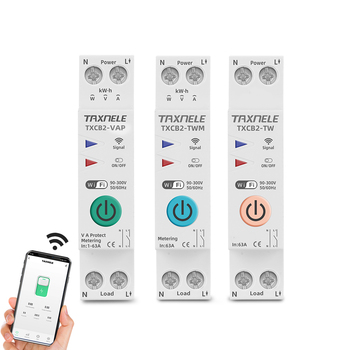 SMART IOT
Tuya WiFi Smart Switch with Bidirectional Solar Energy Metering
- App Remote Control
- Over/Under Voltage
- Bidirectional kWh
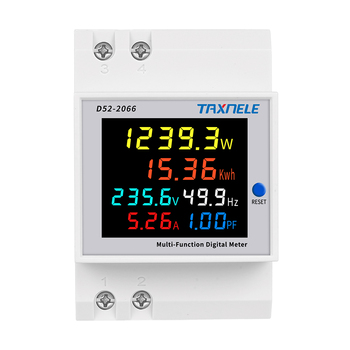 PANEL METER
6-in-1 DIN-Rail Multifunction AC Solar Power Monitor & Analyzer
- Digital Color Display
- 100A Internal CT
- Active Power Factor
Market Dynamics & Future Procurement Trends for Bidirectional Solar Metering
As the global energy transition accelerates towards decentralized renewables, the procurement requirements for a Bidirectional Solar Energy Meter are evolving far beyond basic energy accumulation. Wholesale buyers, electrical equipment importers, and project engineers must evaluate several major technological shifts when establishing long-term supply chain contracts.
Trend 1: Convergence of Bidirectional Metering & Edge Protection
Historically, an electrical panel required separate devices for over-voltage protection, miniature circuit breakers (MCBs), and energy metering. The modern procurement trend favors integrated smart devices—such as DIN-rail bidirectional meters embedded with adjustable over/under voltage relays and remote motorized trip capabilities. This hybrid approach significantly saves space inside consumer units, lowers installation labor costs, and simplifies inventory management for electrical distributors.
Trend 2: Multi-Protocol IoT & Open Microgrid Connectivity
Utility companies and private energy aggregators are moving away from proprietary metering protocols. International buyers increasingly mandate dual-communication architectures: hardwired RS485 (Modbus-RTU / DLMS IEC 62056) for local inverter communication alongside wireless IoT protocols (Tuya WiFi, Zigbee, or 4G CAT-1) for cloud-based EMS software telemetry. Sourcing bidirectional meters with open Modbus register maps allows installers to seamlessly pair meters with third-party home energy management systems (HEMS).
Trend 3: High-Harmonic Resilience in Storage-Integrated Solar Systems
Pulse-width modulated (PWM) switching frequencies from modern silicon carbide (SiC) and gallium nitride (GaN) solar inverters introduce high-frequency harmonics into the electrical distribution system. Legacy metering chips often suffer from measurement drift or calibration decay in high-harmonic environments. Advanced bidirectional solar energy meters designed by Yueqing Favreau Electric Co., Ltd. utilize wide-bandwidth digital signal processing (DSP) and high-sampling-rate ADCs, maintaining Class 1.0 or Class 0.5S accuracy even under harmonic distortion up to the 31st order.
| Technical Parameter | Residential Solar PV Metering | Commercial & Industrial (C&I) PV/Storage |
|---|---|---|
| Meter Type | Single-Phase 2-Wire / 3-Phase 4-Wire Direct | Three-Phase 4-Wire CT Operated (External CT) |
| Voltage Range | 220V / 230V / 240V AC (L-N) | 3×230V/400V AC (L-L: 400V–480V) |
| Current Capability | 5(60)A or 10(80)A Direct Shunt | 1.5(6)A via CTs (Secondary 5A/1A or 333mV) |
| Accuracy Standard | IEC 62053-21 Class 1.0 Active Energy | IEC 62053-22 Class 0.5S / Class 1.0 Active |
| Communication | RS485 Modbus-RTU / Tuya WiFi | Dual RS485, Modbus-RTU, DLMS/COSEM |
| Mounting Form Factor | Standard 35mm DIN-Rail (2U or 4U width) | Standard 35mm DIN-Rail (4U or 7U width) |
Frequently Asked Questions by Global Solar Buyers & Engineers
How does a Bidirectional Solar Energy Meter accurately distinguish imported grid power from exported solar energy?
Why is RS485 Modbus communication essential for zero-export solar system installations?
What is the difference between net metering and gross metering, and how does the bidirectional meter support both?
What certifications do Yueqing Favreau Electric Co., Ltd. bidirectional meters hold for international export?
Can Yueqing Favreau Electric Co., Ltd. provide custom Modbus RTU register mapping for OEM inverter integration?


Manufacturer
Why Global Buyers Partner with Yueqing Favreau Electric Co., Ltd.
Yueqing Favreau Electric Co., Ltd. is a specialized manufacturer headquartered in the Sulu Industrial Zone, Yueqing, Wenzhou—China's world-renowned electrical engineering hub. We specialize in the R&D, precision manufacturing, and international distribution of low-voltage electrical protection and smart energy metering devices.
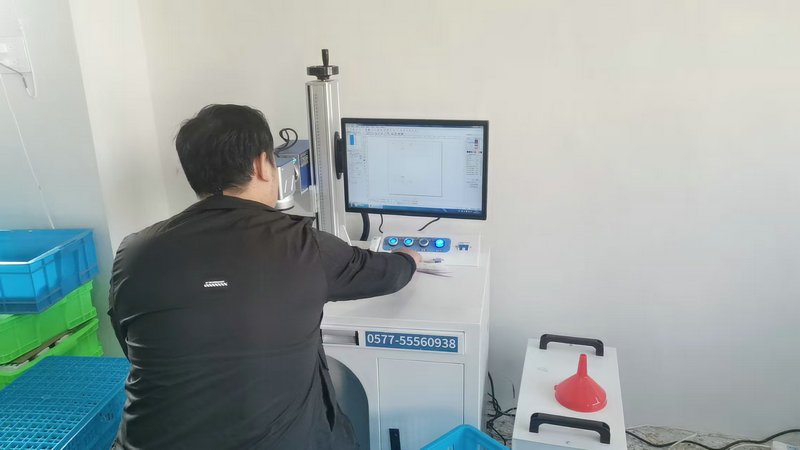
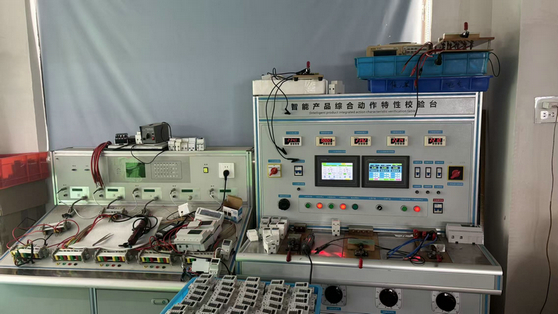
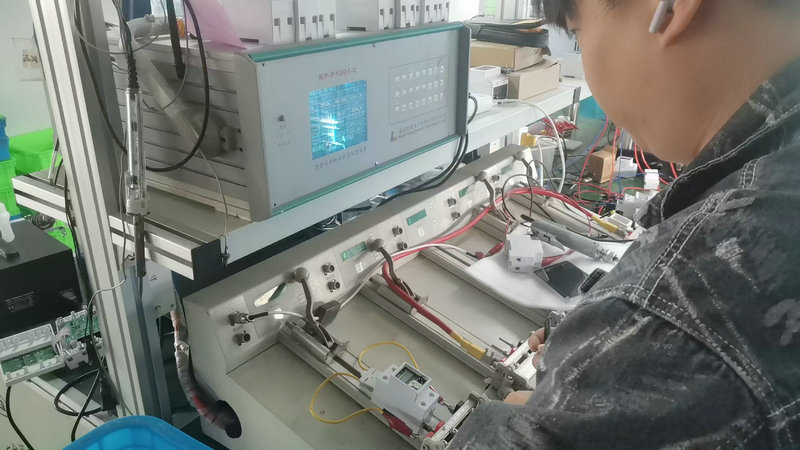
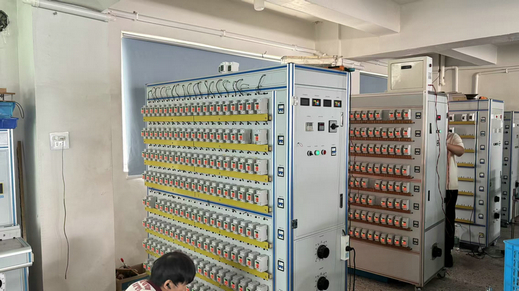
Our modern manufacturing facility is equipped with automated SMT surface-mount placement lines, automatic wave soldering machinery, and computerized meter calibration test benches. We enforce rigorous 100% full-load aging and accuracy calibration across all production runs to guarantee long-term field stability.
- Verified Premises: ISO 9001 certified plant in Yueqing
- Full Compliance: CE & RoHS international testing standard
- Flexible Sourcing: Low MOQ (10 pcs) for OEM/ODM branding
- Technical R&D: Customized Modbus protocols & enclosure artwork
Precision Calibration & Manufacturing Capability
Every Bidirectional Solar Energy Meter from Yueqing Favreau Electric Co., Ltd. undergoes multi-point calibration before final export packaging.
Expand Your Solar Product Line with Favreau Meters
Request comprehensive engineering specifications, Modbus register manuals, and factory-direct wholesale quotes. Contact: info@favreauelectric.com